

Interview with Tony Fretton
“I once believed that if I created architecture that spoke to people, they would naturally understand it. But they do not and that realisation has been revealing for me.”
In the dossier In Continuum: five interviews and one visual essay on the thought and practice of contemporary architecture, Tom Emerson, Ricardo Carvalho, Fernando Viegas, João Nunes and Jeremy Till take up the challenge of debating — individually, yet forming a collective theoretical body — the role of architecture in the contemporary city, addressing themes such as the urban/natural relationship, the right to the city, public space and housing. These reflections are complemented by a visual essay by Duarte Belo.
We also publish a research article by Thais Anastácio Pestana, Between geology and the Atlantic: the Câmara de Lobos Salinas Complex Project. Architecture, Landscape and Regeneration on the south coast of the island of Madeira, and one by Alexandra Casimiro, The Incomplete Forum. The Lisbon Palace of Justice by Januário Godinho and João Andresen. Finally, we conclude the issue with reviews of two works: Begin Again. Fail Better, the book published to coincide with the exhibition “Begin Again. Fail Better – Preliminary Drawings in Architecture (and Art)”, on display at the Kunstmuseum Olten in Olten, Switzerland, between 1 June 2024 and 25 August 2024 (by João Miranda), and Futuro Ancestral, by Ailton Krenak (by Delia Sloneanu). We therefore have a very rich and diverse issue in store, which we hope will provide some excellent summer readings!
“I once believed that if I created architecture that spoke to people, they would naturally understand it. But they do not and that realisation has been revealing for me.”
We also published articles resulting from original research on contemporary national and international research topics: The Carnaxide Expansion Plan: A Reading of the Plan from the Perspective of Landscape Architecture, by Inês Norton de Matos, A Palace for a Baroque Urbanist / The Rhythm of Sant’Ambrogio. Casa Caccia Dominioni and Architecture as a Continuum, by Rebecca Billi, and The Landscape of Time, by Olga Konyukova.
This issue also includes a visual essay by Rogério Taveira and a book review by Madalena Romão Mira of the annotated translation of Joaquim Machado de Castro’s Analytical Description of the Execution of the Equestrian Statue Erected in Lisbon to the Glory of His Most Faithful Majesty King Joseph I, coordinated by Miguel Figueira de Faria and translated by Patricia Delayti.
“I always prefer to talk about the positive things and the positive aspects of things. It was thanks to the school that I became an architect and professor of architecture. And I am a grateful person.”
This edition features two original research articles that address contemporary themes centred on the African continent: Lab, Book, Building: Jane Drew and Maxwell Fry and the Beginnings of Modern Architecture in the Tropics, by José Castro Caldas, and Unlearning by Doing: Research Pedagogies Through Hands-on Projects in Stjwetla, Johannesburg, by Paulo Moreira.
Continuing our commitment to intercontinental dialogue, architects Joaquin Gak and Delia Sloneanu coordinated the thematic dossier A Bridge to Future Pre-existences. This collection builds on the discussions initiated during the first cycle of the Na Ponte lecture series, bringing together contributions from multiple architectural studios in São Paulo and Rio de Janeiro. The dossier explores the notion of pre-existence—considering its generational and diachronic dimensions—and reflects on new modes of thinking and designing in relation to time and spatial continuity.
The dossier begins with an introduction by Joaquin Gak and two texts reflecting on generational dialogue and positioning, The link that unites us by Cristiane Muniz and What is our address in time? Notes on approaching the practice of a generation, by Guido D’Elia Otero and Guilherme Pianca Moreno, interspersed with an interview by Delia Sloneanu
with Joaquin Gak and Diego Portas.
The main body of the dossier is organised into eight thematic clusters: Pre-existence and Abstraction (Anna Juni, Enk te Winkel, Gustavo Delonero, Thiago de Almeida and Priscila Bellas; Programmatic Pre-existences (Alziro Carvalho Neto and Felipe Rio Branco); Pre-existence and Relations (Marina Panzoldo Canhadas, Carlos Zebulun and Juliana Ayako); Pre-existence and weight (Rodrigo Messina, Francisco Rivas, Caio Calafate and Pedro Varella); Pre-existence and resources (Julia Peres, Vitor Garcez); Pre-existence in the landscape (Denis Joelsons, Laura Rosenbusch and Gregório Rosenbusch); Ephemeral pre-existence (Juliana Godoy and Mariana Meneguetti) and Future pre-existences (Marco Artigas). The dossier concludes with an afterword by Delia Sloneanu, reflecting on prospective dialogues and futures.
Additionally, this issue includes a critical review by Sofia Pinto Basto of the book Arquitetura Público Cidade, authored by Ricardo Carvalho.

“Al escribir sobre arquitectura contemporánea, siempre existe el riesgo de una mayor contaminación personal y sentimental. Las arquitecturas del pasado, más distantes en el tiempo, permiten juicios menos influenciados por las prácticas o las inquietudes personales del investigador como arquitecto, lo que no sucede con los temas actuales, donde el vínculo con el presente puede ser muy intenso.”
As this is an emblematic number, 25, we decided to associate ourselves with the celebrations of the 50th anniversary of the 25th of April 1974 Portuguese Revolution. We challenged the architect and UAL professor, Inês Lobo, to invite authors from various disciplinary areas to share with us visions, articles and essays of their vision on the theme “The post-April city”. As a result, we publish a dossier with contributions from architecture, geography, anthropology, law, photography and landscape architecture. The authors wrote about the challenges of the April Revolution to a country, Portugal, a territory which was stagnant and underdeveloped, but also about how much has been done and what still needs to be done, not only to solve persistent problems, but to respond to the new challenges that have, in the meantime, emerged in the world. Being a topic impossible to exhaust, we believe that the contributions we publish constitute unique and current perspectives to better understand the past, present and future of the city and democracy in Portugal.
We also published four articles resulting from original research on representative 20th century architectural projects, still little studied: Delia Ioana Sloneanu presents an investigation about the residence for the Portuguese embassy in Brasília, by Ricardo Bak Gordon and Carlos Vilela Pike; Maria Ana Castro Caldas Aboim Inglez analizes the Pools of Bellinzona, by Aurelio Galfetti, Flora Ruchat-Roncati and Ivo Trümpy; Sofia Pinto Basto establishes a parallel between the book Venezia Minore and the project for the INAIL Headquarters in Venice, by Egle Trincanato; finally, Victor Beiramar Diniz investigates and analyzes Eduardo Anahory’s floating beach-pool-project in Estoril.
This issue also includes a book review by João Miranda on The substance of things, by José Adrião.

“How is the world you live in? Or: How do you see the world? How do you bring everything together to shape your life? How do you manage your life to achieve what you want? What is your house like?“
In this issue we invited the anthropologist and researcher Maria Assunção Gato to coordinate the thematic dossier “Uncertainties about housing and ways of living”, composed by four papers – by Ana Rogojanu, Maria Moreno, Nadezda Pazuhina and Maria Assunção Gato & Filipa Ramalhete – which explore, in different cultural and geographical contexts, how the house, in the contemporary domestic space, answers to uncertainty.
We also publish a paper by Rita Aguiar Rodrigues, who presents and analyzes a selection of Hans Döllgast’s projects, identifying the themes that appear to be eminent and transversal in his work and a paper by João Miranda with an original analysis of the design process of the Francisco & Manuel Aires Mateus “Casa em Alenquer”, based on primary sources.
Finally, this issue includes a review by Tiago Leonardo of the work “água. e a casa é o mundo”, a catalogue of the last exhibition by the sculptor Carlos Nogueira.
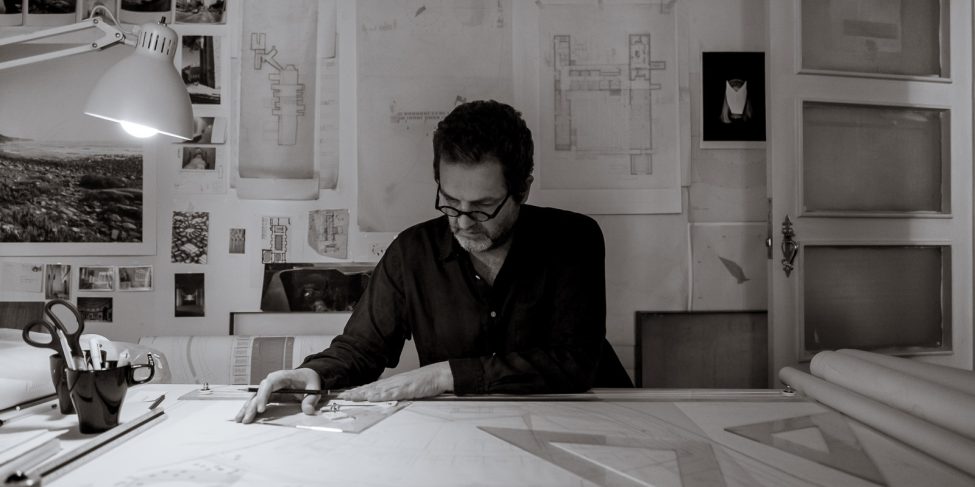
“It all started with drawing. I have always had a passion for drawing. Drawing has been a kind of magical process for me since I was very young.“
In this issue we invited the anthropologist and researcher Maria Assunção Gato to coordinate the thematic dossier “Uncertainties about housing and ways of living”, composed by four papers – by Ana Rogojanu, Maria Moreno, Nadezda Pazuhina and Maria Assunção Gato & Filipa Ramalhete – which explore, in different cultural and geographical contexts, how the house, in the contemporary domestic space, answers to uncertainty.
We also publish a paper by Rita Aguiar Rodrigues, who presents and analyzes a selection of Hans Döllgast’s projects, identifying the themes that appear to be eminent and transversal in his work and a paper by João Miranda with an original analysis of the design process of the Francisco & Manuel Aires Mateus “Casa em Alenquer”, based on primary sources.
Finally, this issue includes a review by Tiago Leonardo of the work “água. e a casa é o mundo”, a catalogue of the last exhibition by the sculptor Carlos Nogueira.
“I am a storyteller. For me, every exhibition has a story and tells another story. In order to write the story and put it on the walls, I need to explain it and share it in a classroom or at a dinner table. “
This issue features a critical review, by Maria Pia Fontana, of the catalogue of the recent exhibition at the Casa da Arquitetura “Flashback / Carrilho da Graça”, an article, based on the original archive research on a project by Peter Wilson (Luiz Júnior), and a visual essay by Eduardo Corales, resulting from the inventory and research project “POWERPOINT: graphic and audiovisual inventory of Portuguese dams”. Finally, we present two thematic dossiers, a Thesis Dossier, with the publication of the theoretical component of two Master’s dissertations by Thea Cuk and Marco Santini, and another resulting from the cycle of conferences “Inhabiting the Public Space”, coordinated, in 2022, by the architect Bárbara Silva.

“Because citizenship, is very important in the question of rights and duties, and of participation. Citizenship means living in a shared space. And that is where architecture comes in. And it does not come in alone, there are more people involved, landscapers, engineers…”
This issue has four articles and a critical review. All articles offer innovative, sometimes even provocative, readings of architects and works that, despite being well-known by the public, are still largely under-researched. We are talking about two international architects (Rem Khoolhaas and Sverre Fehn) and the Portuguese Gonçalo Byrne. These last two result from PhD research projects. Thus, we seek to contribute to a richer theoretical discussion in this field. The review visits the book written a decade ago by the Finnish architect Juhani Pallasmaa “The Eyes of the Skin. Architecture and the Senses”, where the author proposes an approach that explores buildings in a multisensory way, beyond the vision of the object.

“Just as we had the commitment to older generations, we also knew that we had to pass the torch to the younger ones: school as continuity”
We celebrated the fact that we reached number 20 by inviting the architects Pedro Baía and Ricardo Carvalho to coordinate a historical dossier. This dossier is composed by a selection of fundamental texts in Portuguese architecture, written in the last few decades, and long out of print or very difficult to find today. Our purpose it to give these texts a new life, both in Portuguese and English. For this issue, we interviewed the architectural historian Tim Benton. We believe that the conversation we had with was the best way to open this issue, as it opens up innovative perspectives and analyses. Finally, the two reviews, by the architects Miguel Judas and Rodrigo Lino Gaspar, revisit a book and a plan which are fundamental for understanding contemporary Portuguese architecture, starting from what was published, claimed and designed in the years of the dictatorship.
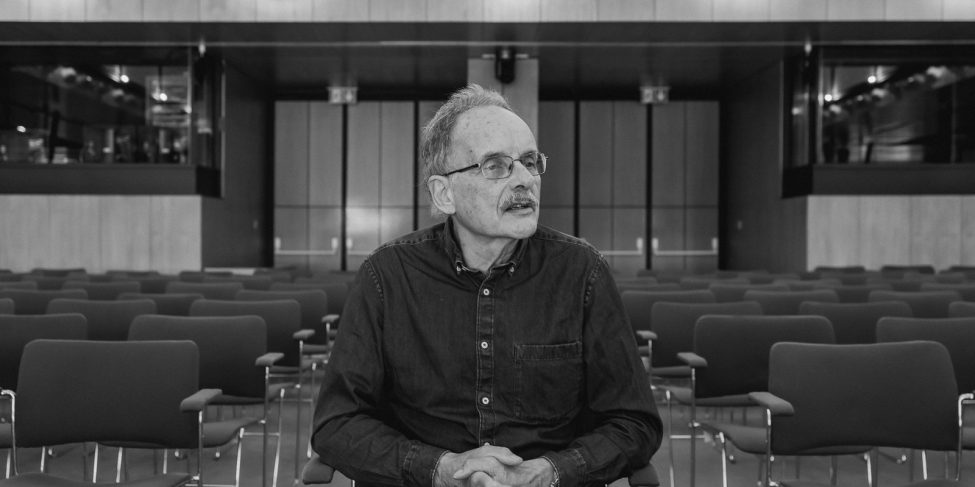
“In order to teach, we have to be charismatic, we have to be persuasive, to inspire and that is good and bad.”
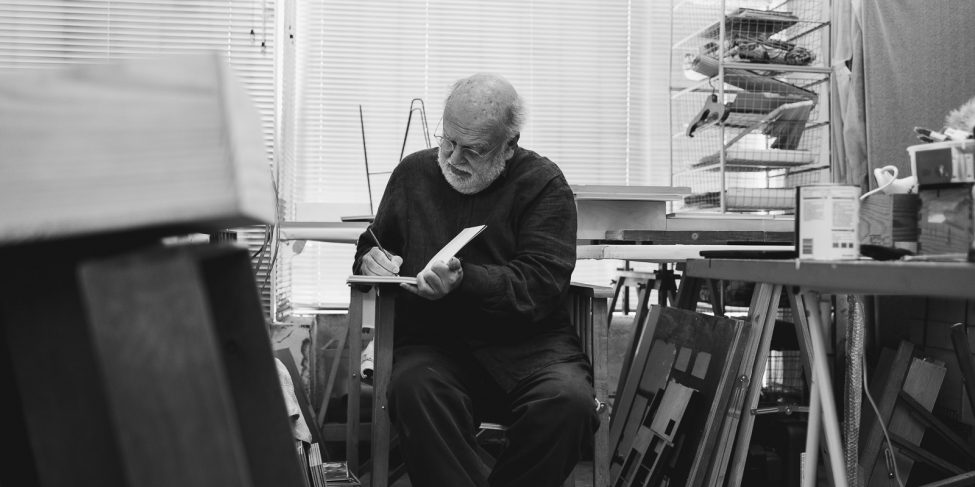
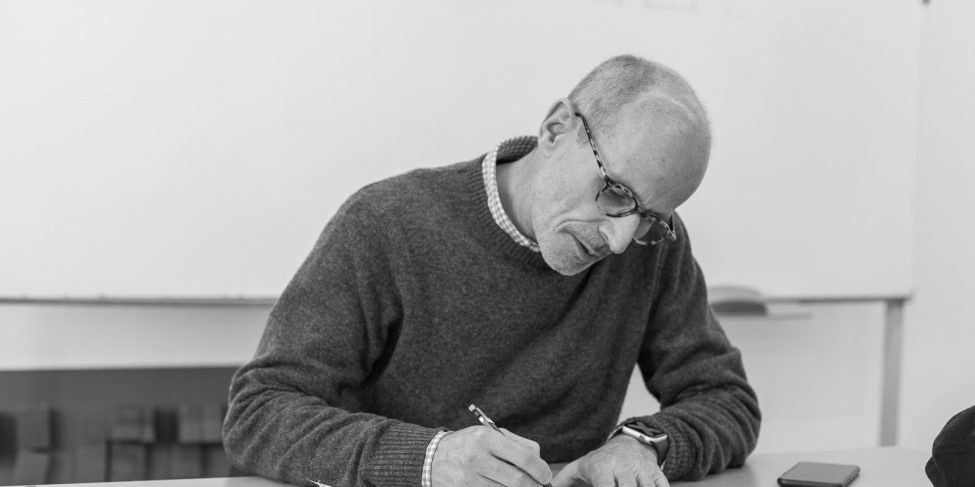
With this issue, we also continue the editorial project, sharing new knowledge, deepened by our contributors and guests, through the written and spoken word, and also through image narratives, crossing research from different geographical locations, professional and thematic areas, promoting innovative knowledge. In this context, we publish also a visual essay and a project review.
2020 is undoubtedly a year of change, and the future is uncertain. It is, therefore, gladly and with hope that we make these changes, so that in 2021 we can celebrate the magazine’s 10th anniversary with new projects. See you soon!
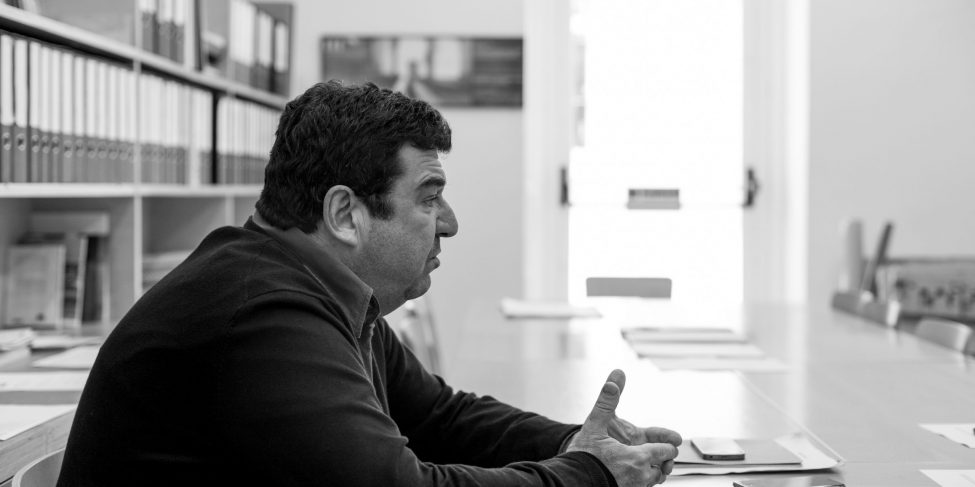
“Projects are made to communicate, they communicate on their own, we will not be there to defend them, to talk about them, they will have their own life.”
We are very pleased to have architect Giorgio Santagostino as our guest. Welcome. We would like to start by telling…
O percurso académico foi feito na Universidade Lusíada em Lisboa, no início dos anos 90, e foi um curso, assim visto em retrospetiva, bastante confuso…
In this issue, we also publish the theoretical component of two master’s dissertations defended in the Autónoma University Department of Architecture. Selected for their quality and originality, these contributions illustrate how research can inform and be an essential component for the design, for students who have finished their degrees in architecture. At last, we present e review on the Simon Sadler book, The Situationist City, which has already became a classic work to understand the Situationist International movement.
I studied at Ljubljana’s Faculty of Architecture in the eighties. The school was still quite academic and severe, although it was considered more an “academia” than a technical school…
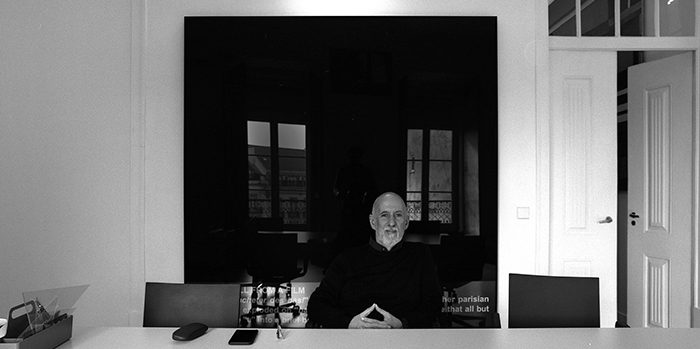
The first day I attended classes while in my fourth year was the 25th of April 1974, the day of the revolution! From that day onwards, things changed, a student committee was formed and we made a list of those professors we would like to have…
At a time when debate on scientific research has taken a new turn – namely due to the demands regarding indexation and a normalization of knowledge dissemination – and the role of the researcher in architecture requires redefinition, we consider crucial that different and innovative perspectives and approaches contribute to thought and reflection on the city and on architecture. The fact that Estudo Prévio is a journal developed in project-oriented school of architecture encourages publication of practical experiences that may contribute to a wider theoretical framework. Nevertheless, more conventional approaches deriving from ongoing research should still be welcome.
As a result, this is a heterogeneous issue that includes an interview with landscape architect João Gomes da Silva, who is also a lecturer at UAL, a wide variety of research papers on the city of Lisbon, as well as papers evidencing research conducted for PhD theses on different themes such as recent Turkish architecture or the column as an architectural element. Two reviews on books on the city of Lisbon are also included – “A internacionalização de Lisboa – paradiplomacia de uma cidade” and “Lisboa. Uma cidade em movimento“, making this an issue focused on the city we live in at a time when Lisbon expands at tourist and economic levels.
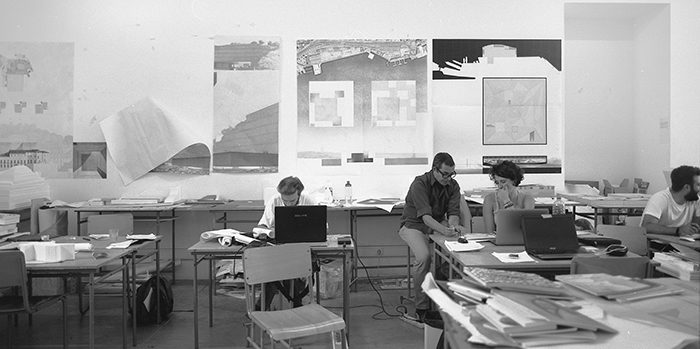
I studied landscape architecture. I graduated from the University of Évora. During high school I was very interested in studying the forest, I was in the science field …
At a time when the debate on scientific research has gained a new perspective – namely regarding indexation together with standardization of the conveying of knowledge – and that research on architecture has increased, we believe we should focus on innovative themes and different approaches which contribute to research on the city and on architecture. Since Estudo Prévio is a journal linked to an architecture school with a strong tradition in project design has led us to publishing on practice that may contribute to a broader theoretical thought. However, we cannot ignore more conventional approaches, resulting from decades of scientific production.
Thus, we invited Professor Ana Tostões, full professor at a Portuguese university, to coordinate and organize a set of papers on a specific theme/issue using different approaches. We proudly accepted to organize an issue devoted to Nuno Teotónio Pereira, which gathers texts from different authors in memoriam of this important Portuguese architect. Our collection also includes the news of a book by Nuno Teotónio Pereira, recently launched by Lisbon City Hall, by Rita Megre. The issue includes a review by André Fernandes of Han Meyer’s book, City and Port. Finally, in this issue we interviewed architect Telmo Cruz.
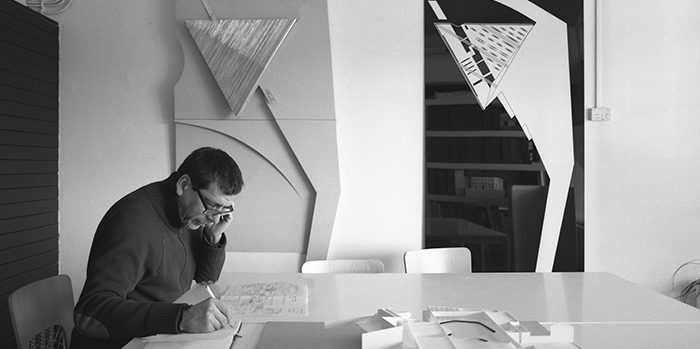
Since I can remember, I always wanted to be an architect. I come from a small land, Seia, and the first memory I have is of being in my room – we had a small television and I was going to see Channel 2 there …
At a time when debate on scientific research has taken a new turn – namely due to the demands regarding indexation and a normalization of knowledge dissemination – and the role of the researcher in architecture requires redefinition, we consider crucial that different and innovative perspectives and approaches contribute to thought and reflection on the city and on architecture. The fact that Estudo Prévio is a journal developed in project-oriented school of architecture encourages publication of practical experiences that may contribute to a wider theoretical framework. Nevertheless, more conventional approaches deriving from ongoing research should still be welcome.
In this context, we invited the architect and professor Paulo Tormenta Pinto and challenged him to coordinate and organize a thematic dossier – “Building in the South – Laboratory for the foundations of contemporary Portuguese architecture” -, addressing different approaches to this theme / problem. The theme is itself a new approach to the architecture made in the South, and brings together a group of authors and studies involved in the dissemination of the research related to this topic, revealing innovative and relevant research, still little explored and published. This issue also includes three articles resulting from our direct invitation to the speakers of a series of conferences held at Da/UAL dedicated to architectural production in the southern hemisphere by key authors on these topics such as Ana Tostões and Ana Magalhães.
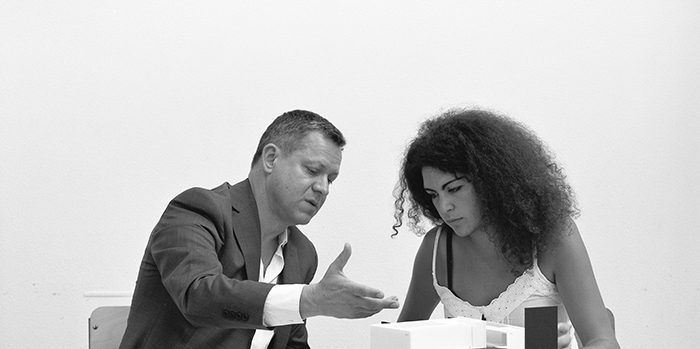
I grew up in a very large house, which was a very beautiful house, in Silves, in the Algarve. It had been designed by an architect, clearly influenced by Raul Lino, it was a very beautiful house, a special house …
At a time when debate on scientific research has taken a new turn – namely due to the demands regarding indexation and a normalization of knowledge dissemination – and the role of the researcher in architecture requires redefinition, we consider crucial that different and innovative perspectives and approaches contribute to thought and reflection on the city and on architecture. The fact that Estudo Prévio is a journal developed in project-oriented school of architecture encourages publication of practical experiences that may contribute to a wider theoretical framework. Nevertheless, more conventional approaches deriving from ongoing research should still be welcome.
In this context, we invited for the next issues authors with relevant work in research towards to the city, architecture and territory. These editors are invited to coordinate and organize thematic dossiers, with different approaches the themes. The first guest, the anthropologist Maria Assunção Gato, specialist in research on house and spatial anthropology of space, coordinated the dossier “Ethnographies of the house, values and ways of living”, gathering a group of authors and studies with whom we believe we have taken an important step in the dissemination of research related to home, a fundamental and comprehensive research area, but still little explored and published. This issue also includes two articles, in response to our open invitation for article submissions, one dedicated to the contribution of geographic information technologies to territorial planning (Susana Brito and Teresa Santos) and another to research in architectural design (Joana Vilhena).
I am still part of the group formed at the School of Fine Arts of Lisbon, of the first expressive group in Lisbon, which at the end of the seventies, started the course at the School of Porto …
At a time when research in Architecture is still open and even in question, we wanted to cross themes that addressed contemporary and recurrent issues in the profession, from the Crisis and Participated Architecture to the Suburbs and Neighborhoods. In this issue we publish an interview with the architect Ricardo Carvalho, current Director of the Department of Architecture at the Universidade Autónoma de Lisboa, an article in the area of Law, opening the range to interdisciplinary collaborations, a theoretical research article on architecture and a dossier of three masters dissertations, aiming to disseminate the quality research carried out at universities, in this case at UAL and ISCTE.
Through the interviews, we surveyed the academic and professional paths of internationally recognized architects, who cross practice with the academy and, in some cases, with research and publication/dissemination of Architecture. We also reviewed books that are unavoidable references in ateliers and universities and presented more recent ones, which also became important to think about the territories of architecture and knowledge. The commitment to a bilingual journal and image quality were assumed the beginning of the project, and supported by UAL as fundamental for the dissemination of the contents. We reached forty thousand readers over these four years.
I entered a school completely adrift where there was an absolute lack of debate about the themes of architecture (or any other). This meant that my colleagues and I had to look, outside of school, for what it meant to learn to think and do Architecture …
The architects interviewed in the various Estúdio Prévio issue were very determined saying that the professional practice in which they are involved – carrying out architectural projects, from territorial analysis to the completion of the work, going through all the research processes and selection of constructive methodologies and respective materials – is in itself a valid method of research, as it follows the procedure of any other type of investigation: Thesis, Antithesis and Synthesis. Starting from a set of principles, new questions arise – which, curing the process, are acepted, rejected and solved in a finished work, shared by all.
The problems raised by recent doctoral theses in Research through Architecture focuse on its validity as an object of study, especially when architects/researchers choose to work on their own architectural production. In a way, this new doctoral aspect forces us to be more open about the themes validated by the academy since, until very recently, only research was carried out on the History of Architecture (monographs and thematic historiographies), Urbanism or Technique in Architecture (constructive methods and constitutive elements).
On the other hand, the growing need to cross knowledge from various disciplines (developed by many of the projects and collectives in recent years) make this different approaches unavoidable, resulting more from an increasingly innovative synthesis of various types of knowledge than from a cumulative sum of knowledges, as it was the usual practice.
The dossier published in this issue gathers papers presented at the international conference “Espaço Público. O Lugar da Praça in Cidade Contemporânea”, organized by Da/UAL, in partnership with ISCTE and with the support of the Order of Architects, on the 13th and 14th january 2012.
We graduated from the Faculty of Architecture at a difficult time in college, at that moment of the great wave of postmodernists in Portugal. At the time, I was working in the studio of architect Gonçalo Byrne …
I attended the Faculty of Architecture but my course was a course in Fine Arts, taken at the old school at the Convent of São Francisco. It was a remarkable space, very interesting in the long and wide corridors and not so interesting in the classrooms …
Villa Rotonda, Villa Savoye, Farnsworth house, Malaparte house, Rietveld Schröder house, are names of houses as well-known as any international museum. The design of a house has always been, for the architect, a space for research and freedom in the field of exploring new spaces and new correlations between them, new programmatic organizations, new materials and new ways of building the Habitar (inhabiting).
Currently, we live in a moment without universal dogmas, but it can be said that, in terms of house designs, we observe a Japanese-influenced fashion that paints everything white and frees spaces for hybrid uses, functionally disaggregated from everyday reality. On the other hand, with the growing remodeling market in “Crisis Europe”, there is a critical inertia that uses the same imagery for all projects: light gray wooden or self-leveling floors, walls, ceilings, kitchen and bathroom. white bathrooms, 3 bedrooms, living room, kitchen, 2 or 3 bathrooms…
Surveys and investigation works such as the Popular Architecture Survey or the studies on Social Housing carried out by LNEC under the coordination of the architect Nuno Portas or, internationally, studies on housing carried out by authors such as Engels, Alison and Peter Smithson, contributed to understand the different domestic architectures in specific territories, cultures and populations. On the other hand, the global dissemination of architectural projects added the number of possible references, prone to the uncritical use of collages and transposed influences. for the house project. At the same time, paradoxically, there is a growing interest in local materials and techniques and in their integration into contemporary architecture works. Currently, we live in an age without universal dogmas, but it can be said that, in terms of house designs, there is a Japanese-influenced fashion that paints everything white and frees spaces for hybrid uses, functionally separated from everyday reality. On the other hand, with the growing remodeling market in the “Europe of Crisis”, we are witnessing a critical inertia that uses the same imagery for all projects: wooden floors or light gray self-leveling, walls, ceilings, kitchen and bathroom. white bathrooms, 3 bedrooms, living room, kitchen, 2 or 3 bathrooms…
– Will contemporary houses be adapted to new forms / rhythms of life?
– Are architects wasting opportunities to rethink and make the Habitar evolve?
– What other knowledges and disciplines are thinking about inhabiting? What conclusions are they reaching to? How is this knowledge absorbed and integrated into architecture?
– Are we all reducing our well-being by adapting ourselves to the existing homes?
– And, finally, what house should the contemporary house be?
In this issue we have the opportunity to publish papers dedicated to this theme, with contributions that go beyond the restricted field of architecture. The first, by the anthropologist Maria Assunção Gato, approaches the House as a privileged space for identity expression and social representation, from its location to the decorative objects that the house exposes to restricted visits. The second one, by the architect Sérgio Silva and mathematician Francisco Blasques, develops the possibility of incorporating, in the process of creating a project, a public consultation through an online questionnaire format, to map the individual preferences of possible users before materializing them. The house appears in this mapping project, Archimetry, as an experimental example of a system still in process that combines Statistics with Research in Architecture and, potentially, with the practice in Architecture.
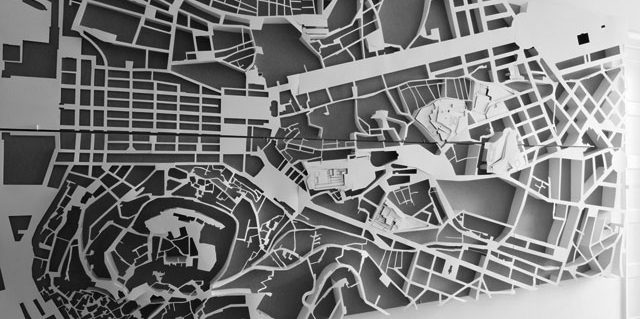
Countries with emerging economies are and will always be a breeding ground for new proposals, new projects, enabling them to achieve theoretical hypotheses and even projects which initially might have been difficult to handle. Over the past twenty years, we have seen the worldwide development and economic growth of several countries – China, United Arab Emirates, and more recently, Angola and Brazil, among others – and following that same growth has always been the possibility of implementing many projects and proposals for a new century.
At a time when most of our architects are emigrating, or working from Portugal for emerging countries we propose with this issue to open the overdue debate on the type of activities done by Europeans in emerging countries and also on the type of requests made from those countries, to know what they think about the work of those emigrating professionals or “remote control” professionals. For a new generation of architects, freed from the colonial past, the personal challenge is working in countries, where they can speak the same language, and also the professional opportunity of seeing their projects built. However, even if – as referred by José Adrião in his interview in this issue – young architects are well prepared from a technical and conceptual point of view, when facing the reality many questions and doubts appear: what kind of architecture can be made in these contexts and how? What is expected from the architect is it a “foreign” professional, an agent of modernity, or a professional that integrates models and promotes continuity? How do you overcome existing barriers (linguistic, cultural, technical and even the size of the territories)? How to take advantage of what can be innovative and potentially interesting in territories under construction?
At the end, we will always have built territories. We just need to know how.
I joined the university in 1984, for the course at the Technical University of Lisbon. I remember perfectly the first day I entered the Escola de Belas Artes, left the metro at Rossio and went up Rua Garrett. Studying in Chiado was a privilege …
Despite the efforts of some initiatives to resolve various peri-urban areas, the truth is that most of them resulted in specific arrangements for some medium-sized cities and did not indicate any resolution for the disconnectivity of the various suburban centers, still dependent on the mother city. The figure of the planner – whether he is an urban planner or an architect – is often distant from any discussion of the suburbs, resulting in the production of territorial management instruments without a “concept”, which results in an overlap of instruments that do not help to solve problems effectively, creating growing contradictions. Even in terms of architectural production, few author architects receive orders placed in the suburbs, generating a professional myth that “you can’t do anything properly” except in the cities – excluding, of course, holiday homes or holiday homes. weekends, in bucolic spaces.
In this context, the widening of the discussion, and the possible demystification of the suburbs, is hampered by the ambiguity and dispersion that the concept is capable of assimilating. The suburb has become a word capable of integrating and signifying completely disparate spaces such as the segregated neighborhood (r), the periphery, the city limits, the neighborhoods, the industrial zones, satellite cities, outskirts, garden- cities, informal city, non-place, or, peri-urban territories.
We hope that this number Estudo Prévio will start the debate around this extensive problem that wanders in the unconscious of all of us and that it is possible to transform the suburbs into fertile territories that promote solutions for “well-being and well-being” of the human being.
It’s been over 50 years. I must have joined Fine Arts in 53 or 54, I don’t remember well. I always went to schools, we lived in Parede, so I always walked in Parede …
At the Lyceum I had a very interesting, very strong, very striking teacher, the Painter António Quadros, who ended up in Mozambique, where I was at that time, and was our Drawing Teacher…