

Rogério Taveira
r.taveira@belasartes.ulisboa.pt
Assistant Professor at the Faculty of Fine Arts, University of Lisbon.
To cite this article:TAVEIRA, Rogério – Topographies of Multiplicity: The Image as a Relational Space. Estudo Prévio 27. Lisboa: CEACT/UAL – Centro de Estudos de Arquitetura, Cidade e Território da Universidade Autónoma de Lisboa, 2025, p. 96-105. ISSN: 2182-4339 [Available at: www.estudoprevio.net]. DOI: https://doi.org/10.26619/2182-4339/27EV
Received on July 1, 2025, and accepted for publication on July 7,2025.
Creative Commons, licence CC BY-4.0: https://creativecommons.org/licenses/by/4.0/
“The arts only ever lend to projects of domination or emancipation what they are able to lend to them, that is to say, quite simply, what they have in common with them: bodily positions and movements, functions of speech, the parcelling out of the visible and the invisible.” The Politics of Aesthetics: The Distribution of the Sensible. London/New York: Bloomsbury / Continuum, 2004, p. 19. (originally published in 2000).
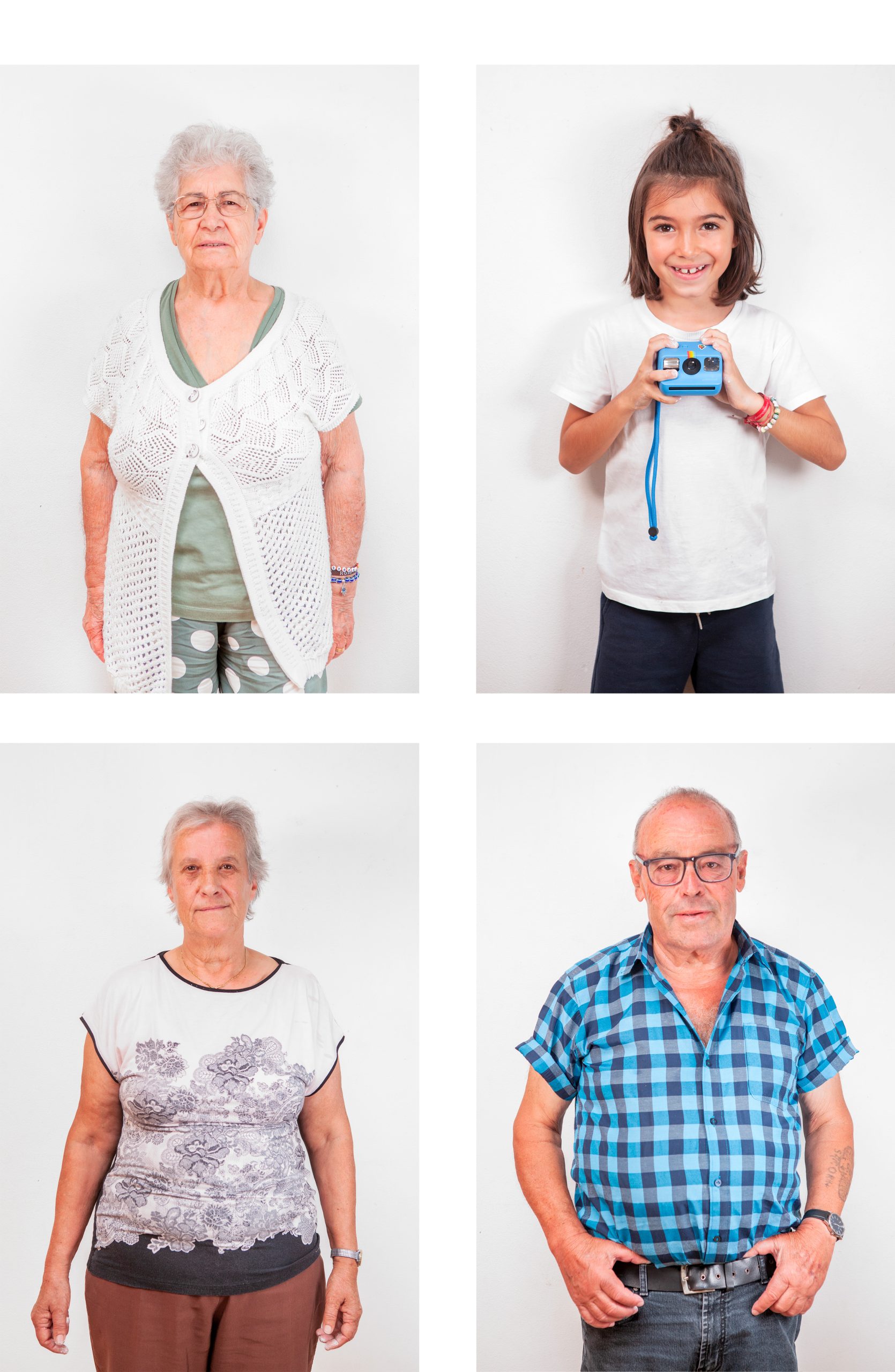
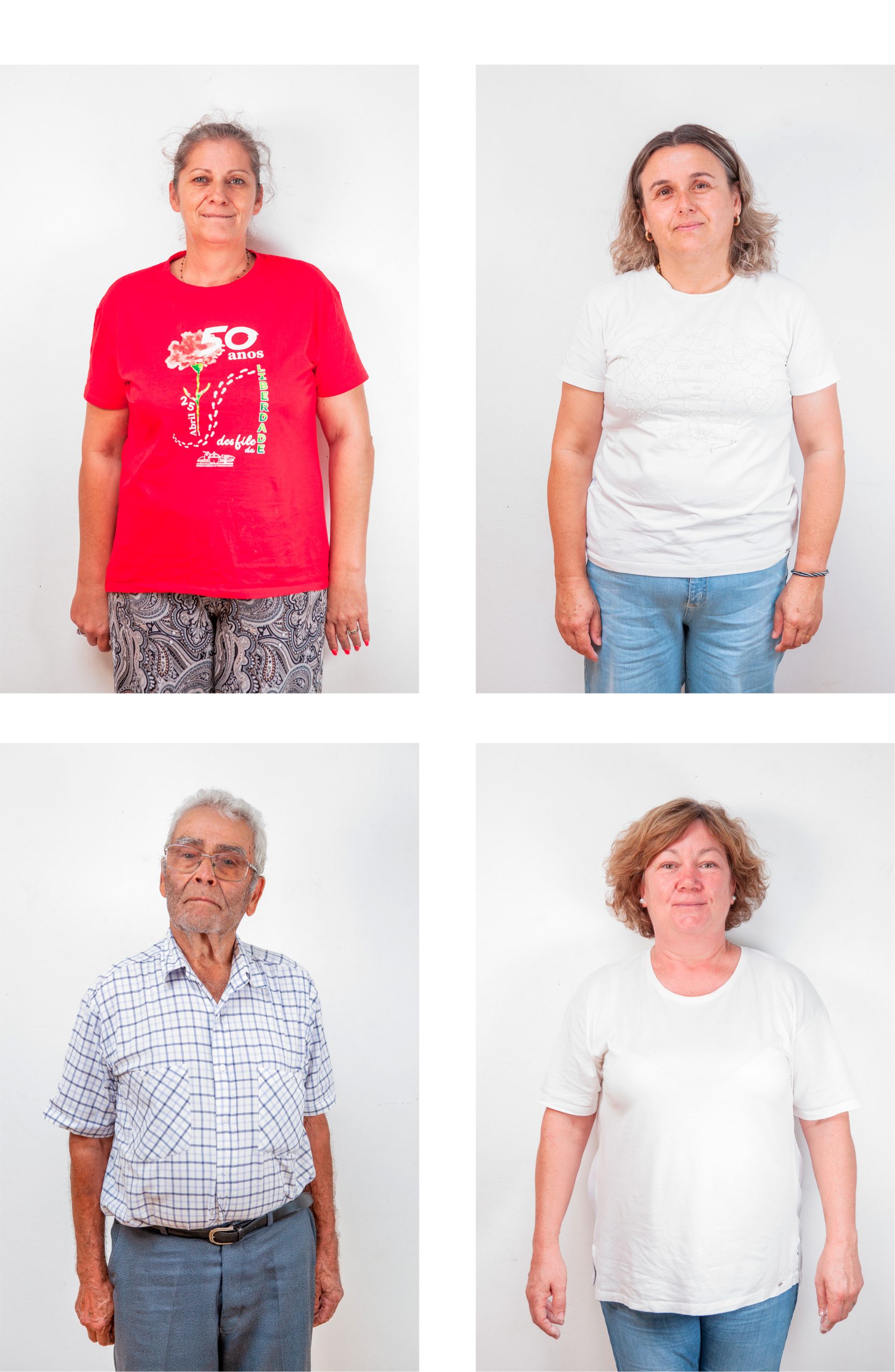
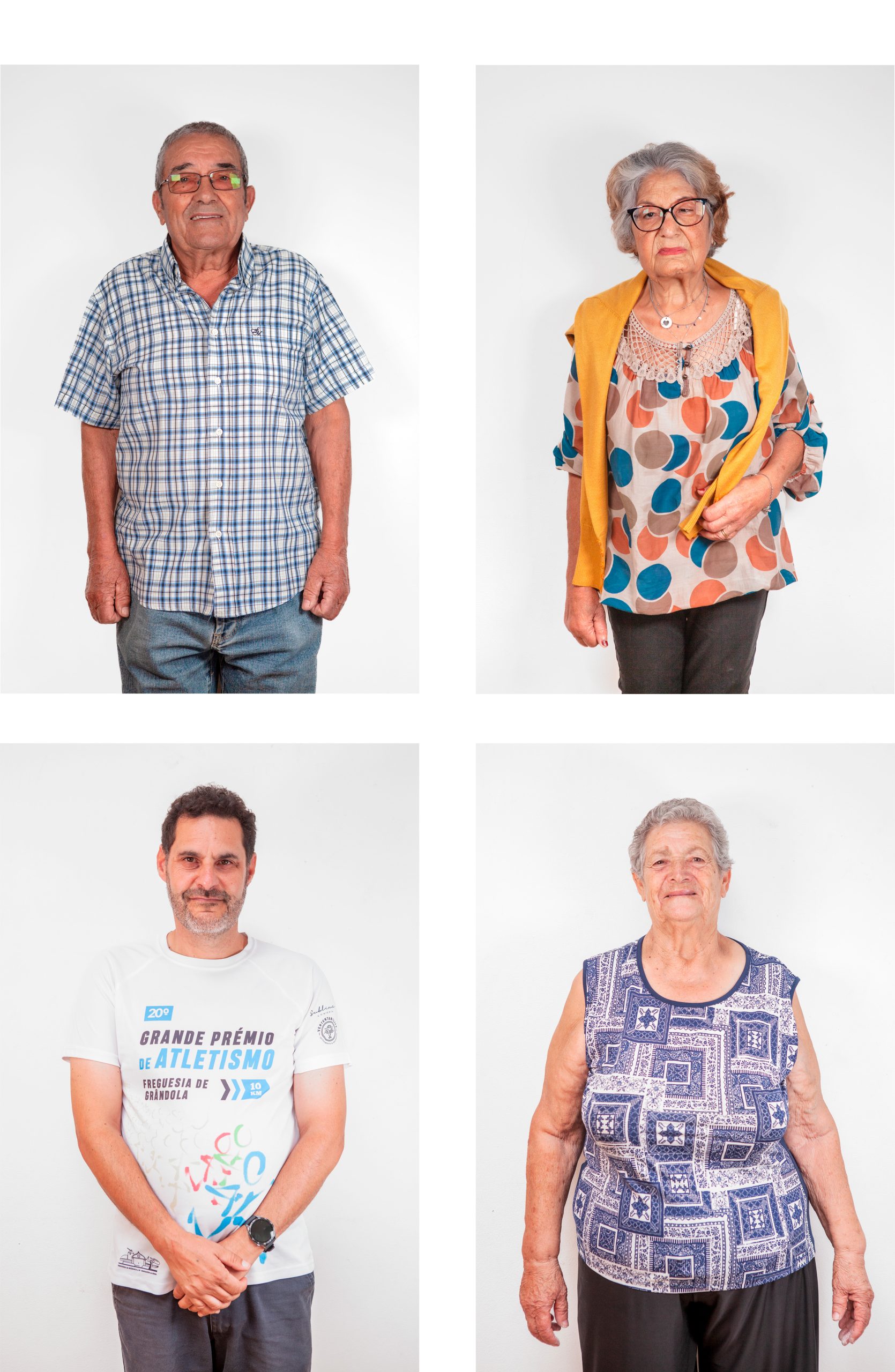
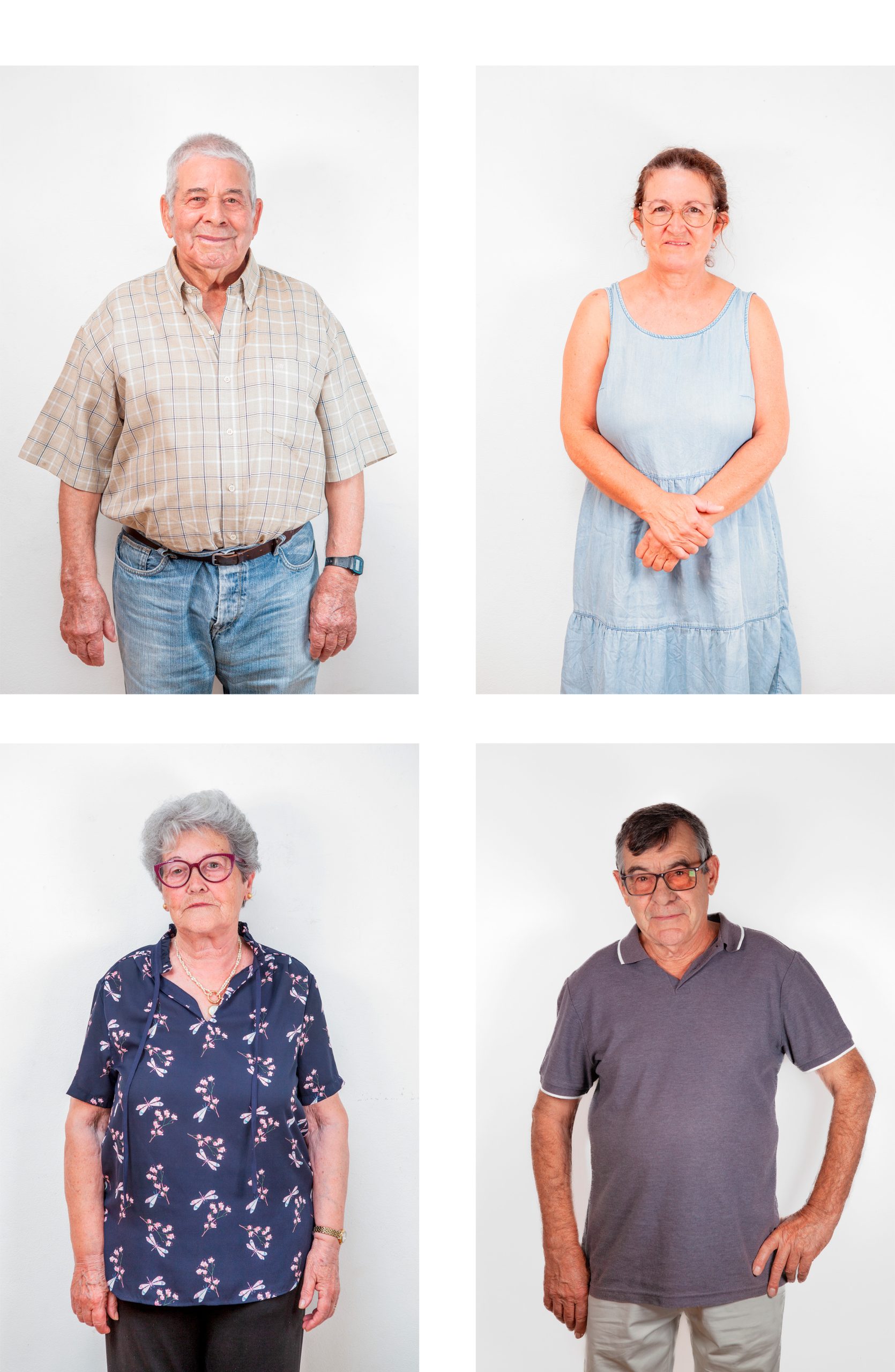
By granting visibility to the singularity of the faces and bodies that compose the heterogeneous fabric of a community engaged[1], in a socially committed public art process, the photographic work presented here positions itself as an integral part of the collective logic that structures participatory creation, rather than in opposition to it. On the contrary, it recognises and affirms this logic as the fundamental political and poetic matrix of the field of enunciation within which this series is situated. This set of portraits does not present itself as external documentation or detached record, but rather as a gesture deeply embedded in the process of individuation, seeking to critically reinscribe the photographic dispositif — historically associated with practices of surveillance, normalisation, and appropriation — within a regime of horizontal relations, ethically shareable and politically situated.
It is important to emphasise that this gesture did not arise from an a priori methodological decision or from the application of external models. Rather, it emerged as a situated and contingent response, deeply rooted in the collective process itself, particularly in light of the mistrust and tension generated by the presence of recording devices — photographic and video cameras — which were legitimately and understandably perceived as extensions of regimes of control, extraction, and distance. Their presence reinstated, even if unintentionally, hierarchical dynamics that the process itself sought to suspend. Faced with this tension, it became crucial to reinscribe the camera within a space of ethical relation, conceiving practices capable of counteracting the historical logic of appropriation that structures the photographic act. In this sense, a seemingly simple yet profoundly transformative gesture was adopted: photographing each participant and subsequently returning to them, in printed form, their own portrait. This act of return displaces photographic practice from a regime of unilateral appropriation to one of sharing, care, and mutual recognition. By distancing photography from its instrumental function, this relational regime contributes to an exercise in the decolonisation of the gaze, reinscribing the photographed subject as an active co-agent in the construction of a visual space grounded in reciprocal responsibility.
Although this series engages obliquely with certain genealogies of photographic portraiture — particularly practices of frontality and formal repetition — it is not grounded in a visual tradition as an end in itself. The photographic dispositif is mobilised not as a taxonomic instrument or a technology of typological ordering, but rather as a response to an ethical and political imperative: the need to construct a space of horizontal relation and to suspend the suspicion intrinsic to the act of photographing. The image thus becomes a space of encounter and interval, opening a relation between subject and photographer, between the visible and the enunciable, between openness to the other and irreducible opacity — operating, therefore, within the political field of the distribution of the sensible.
What thus emerges are topographies of multiplicity: precarious cartographies drawn through the juxtaposition of exposed singularities, refusing symbolic homogenisation without relinquishing the possibility of sharing. The proposed gesture seeks to open a deliberately destabilised space, conducive to the emergence of other forms of presence, attention, and listening that resist identity-based recognition. The common, as proposed here, is constructed through the collective exposure of difference, through contingent confrontation and the productive friction that arises from it. Ultimately, what is proposed is a repositioning of the boundaries of the visible and of the possible forms of the common.
The photographic operation underpinning this proposal does not seek to capture or fix identities, but rather to summon presences and sustain, on the plane of the image, the irreconcilable tension between the one and the multiple, between the sensible and its distribution. By refusing the closure of immediate recognition, these images insist on opening a relational space in which visibility ceases to function as a naturalised given and instead becomes a provisional, inhabitable, and necessarily shared construction.
Photographs by Manuel Taveira and Rogério Taveira
[1] The public art project Unidos Venceremos, developed within the framework of a socially engaged practice, took place throughout 2024 in the Alentejo village of Canal Caveira, in the municipality of Grândola. Developed by Sérgio Vicente with the direct involvement of the local community, this collaborative process sought to articulate situated artistic practices with dispositifs of collective memory and civic participation, taking as its symbolic and political horizon the celebration of the fiftieth anniversary of the April Revolution of 1974.
Keywords: Photographic portraiture; Individuation; Multiplicity; Relational space; Politics of the sensible.
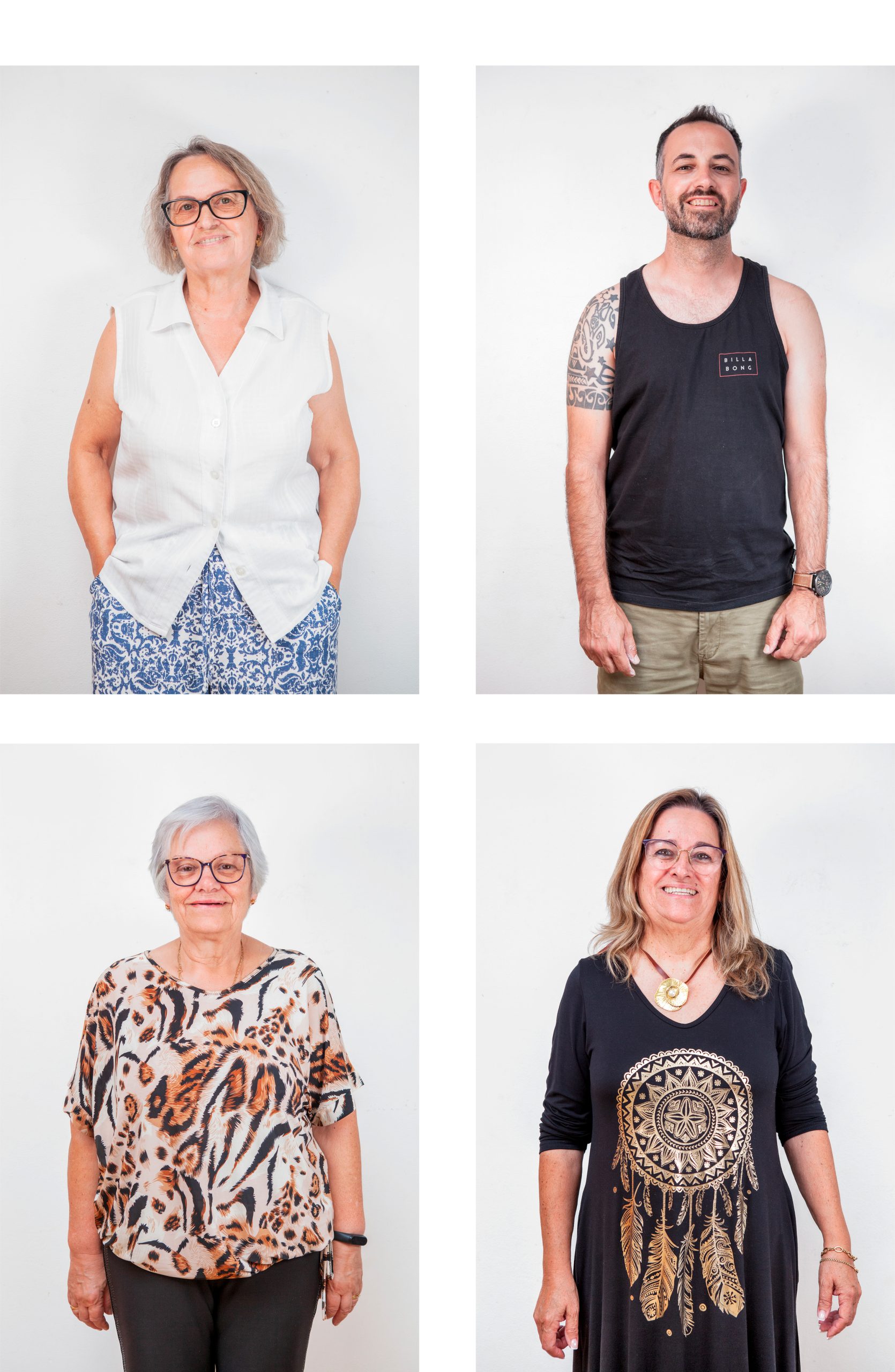
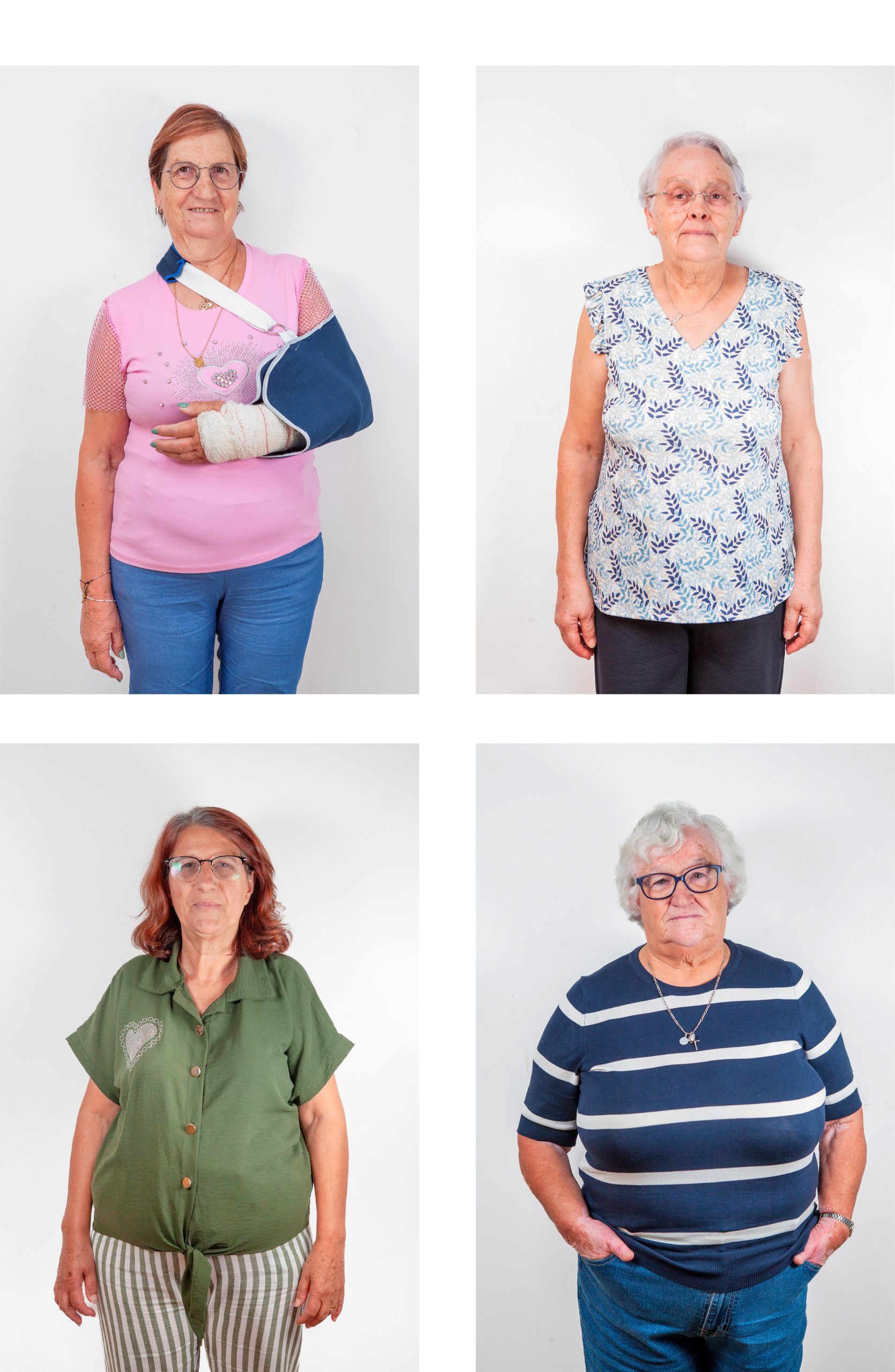
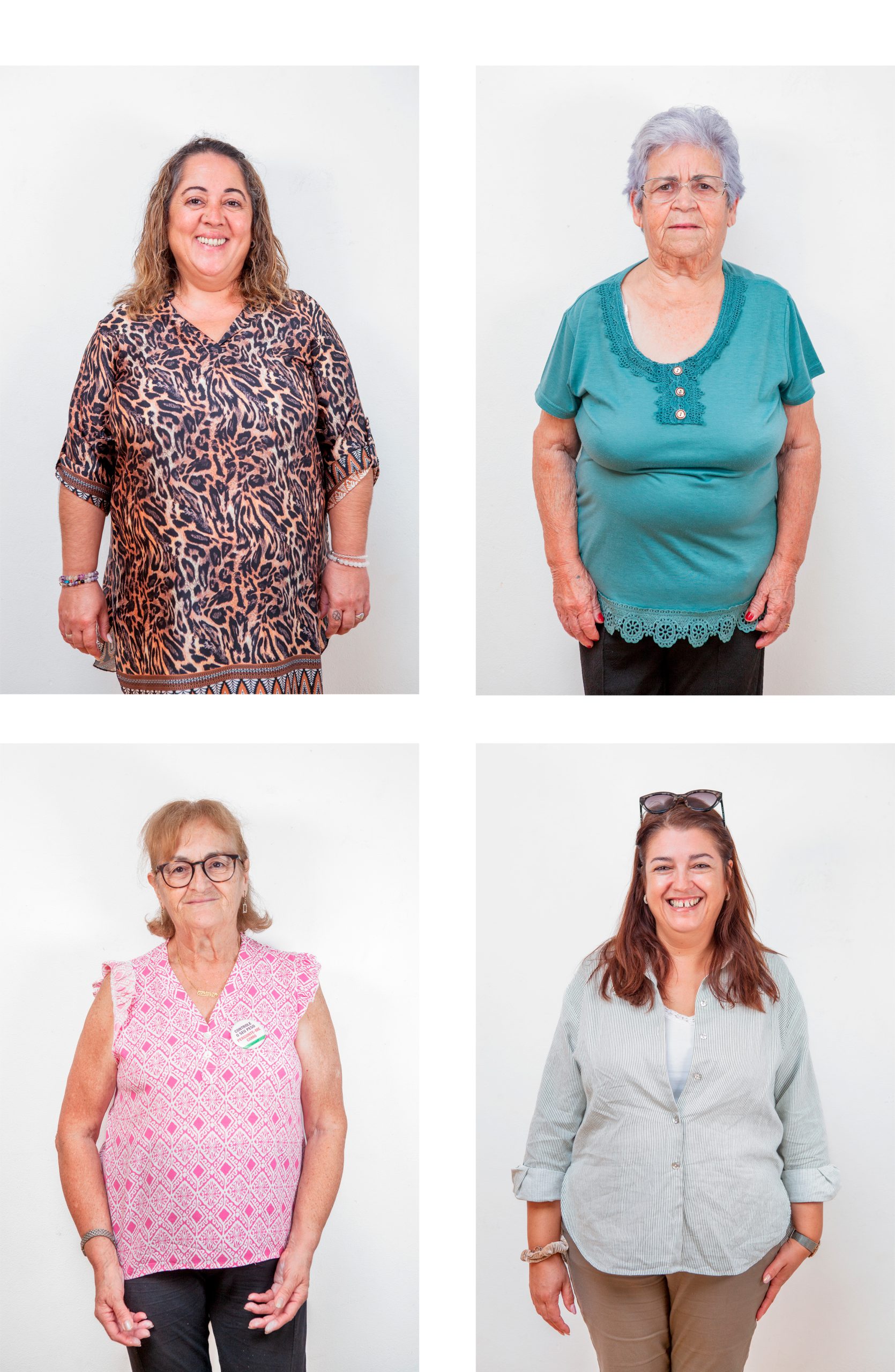
CAPTIONS
Figure 1 – Rosa, 2024
Figure 2 – Tomás, 2024
Figure 3 – Fernanda, 2024
Figure 4 – António, 2024
Figure 5 – Deolinda, 2024
Figure 6 – Rita, 2024
Figure 7 – Luís, 2024
Figure 8 – Maria do Céu, 2024
Figure 9 – Manuel, 2024
Figure 10 – Maria Helena, 2024
Figure 11 – Renato, 2024
Figure 12 – Justina, 2024
Figure 13 – Eduardo, 2024
Figure 14 – Graça, 2024
Figure 15 – Maria, 2024
Figure 16 – Rita, 2024
Figure 17 – José Cândido, 2024
Figure 18 – Rúben, 2024
Figure 19 – Ana Maria, 2024
Figure 20 – Cândida, 2024
Figure 21 – Fátima, 2024
Figure 22 – Maria Isabel, 2024
Figure 23 – Graça Paulino, 2024
Figure 24 – Maria Galvão, 2024
Figure 25 – Marta, 2024
Figure 26 – Susana, 2024
Figure 27 – Idalina, 2024
Figure 28 – Filomena, 2024