

Thais Nogueira Romano Anastácio Pestana
tha_anastacio@hotmail.com
Architect and Professor, currently a PhD student at the Department of Architecture of Autónoma University of Lisbon (Da/UAL), Portugal. CEACT/UAL – Centre for the Study of Architecture, City and Territory of Autónoma University of Lisbon, Portugal and São Paulo, Brazil.
To cite this article: PESTANA, Thais Nogueira Romano Anastácio – Between geology and the Alantic: the Câmara de Lobos Salinas Complex Project. Architecture, Landscape and Regeneration on the south coast of the island of Madeira. Estudo Prévio 28. Lisboa: CEACT/UAL – Centro de Estudos de Arquitetura, Cidade e Território da Universidade Autónoma de Lisboa, junho 2026, p. 24-62. ISSN: 2182-4339 [Disponível em: www.estudoprevio.net]. DOI: https://doi.org/10.26619/2182-4339/28.2
Received on July 15, 2025, and accepted for publication on May 22, 2025.
Creative Commons, licence CC BY-4.0: https://creativecommons.org/licenses/by/4.0/
Abstract
On the cliffs of Madeira Island, the landscape imposes a rare type of attention: Resilience. This is the case of the Salinas Swimming Pools in Câmara dos Lobos, inaugurated in 2006. We will present the design strategy and its relation to the landscape of this project, which is part of a set serving as a promotional agent for the rehabilitation of the Câmara de Lobos Bay region. In a precision action by Paulo David Architects, in partnership with the Global Landscape Atelier by João Gomes da Silva and Inês Norton, pools are set for the local community.
We conducted our analysis through a historical review context and the relation with landscape, based on three concepts – “Drawing”, “Voice” and “Poetics”, which will provide support for the development of this essay. With an iconographic reading and an analysis of the drawings, we recognised key elements such as stairs, platforms, walls, pavilions, and materiality, through which we read the project, permeated by the discourses of the authors themselves and some critics who have published on this theme.
Using some references through Robert Smithson’s and the Entropic Landscape concepts, including also Jorge Simmel, we were able to read the design project from a poetic point of view, providing subsidies for a wide perception between two eras, ruin and permanence, that we consider an important view to understand the local.
Keywords: Madeira Island, Salinas Complex, Paulo David, João Gomes da Silva, Project Analysis.
Introduction
The project of the Salinas Swimming Pools in Câmara de Lobos, in Madeira Island, developed by architect Paulo David between 2002 and 2004, in close collaboration with landscape architect João Gomes da Silva, from Global Atelier, is interpreted here as a silent but deeply informed response to the strength and complexity of the Atlantic natural landscape. A systematic analysis of the project plans and the graphic pieces will highlight “key” elements identified as a platform, stairs, paths, pavilion and materiality, enabling the recognition of a sequence of guidelines for this project.
In addition to this sequence, we surveyed critics’ discourses about the project, including interviews and visits to the authors’ studios. Paulo David has had his studio in Funchal, his birthplace on Madeira Island, Portugal, for more than 20 years. João Gomes da Silva and Inês Norton, from Global Landscape, have a studio in Lisbon’s Graça neighbourhood, playing a significant role in contemporary Portuguese architecture.
The state of the art brings together a vast amount of material on the Swimming Pools and the Salinas de Câmara de Lobos Complex, books such as “The Order from Landscape” by João Gomes da Silva (2019) “The Lessons of Continuity” by Barbara Bogoni(2023), dissertations like “O Labirinto do tempo ” by Maria Trindade (2021), other articles and special publications in periodicals such as JA n.º 227 (2007) with an article on swimming pools and 2G n.º 47(2008) with an exclusive publication on the work of Paulo David like Emilio Tuñon whith the article “Geografia como Corpo e Arquitetura como Geografia”, PAG 8-13 and Gonçalo Byrne “La Arquitectura de Paulo David. Un Arquipielago de Pensamientos”, PAG 4-7. Several websites also provide extensive coverage of this project, including publications from Landezine (2006), Afasia (2010), ArchDaily (2011).
The question of this essay was: How to intervene in bordering places that present telluric fragility, oceanic force and social perenniality, achieving local regeneration, without interfering in the symbolism of the landscape? The answer comes in an extremely orthodox design discipline and resilient materiality.
1. History and Geographical Context.
Since the fifteenth century, the village of Câmara de Lobos, located on the south coast of the island of Madeira, on a territory of great symbolic, cultural and landscape importance, has had an intimate relationship with the sea, functioning as a natural shelter for fishing vessels, namely the traditional fishing of Black Scabbardfish. The village was developed on a natural amphitheatre, where the volcanic cliffs define a dramatic yet fertile morphology. The landscape of Câmara de Lobos was already seen as a reference for promoting Madeira Island, offering good views of Cabo Girão, a peak over 500 meters in altitude. Thus, postcards already placed the Bay of Câmara de Lobos present in the image and memory of the Island. In Figure 1, we see a postcard to promote the island.
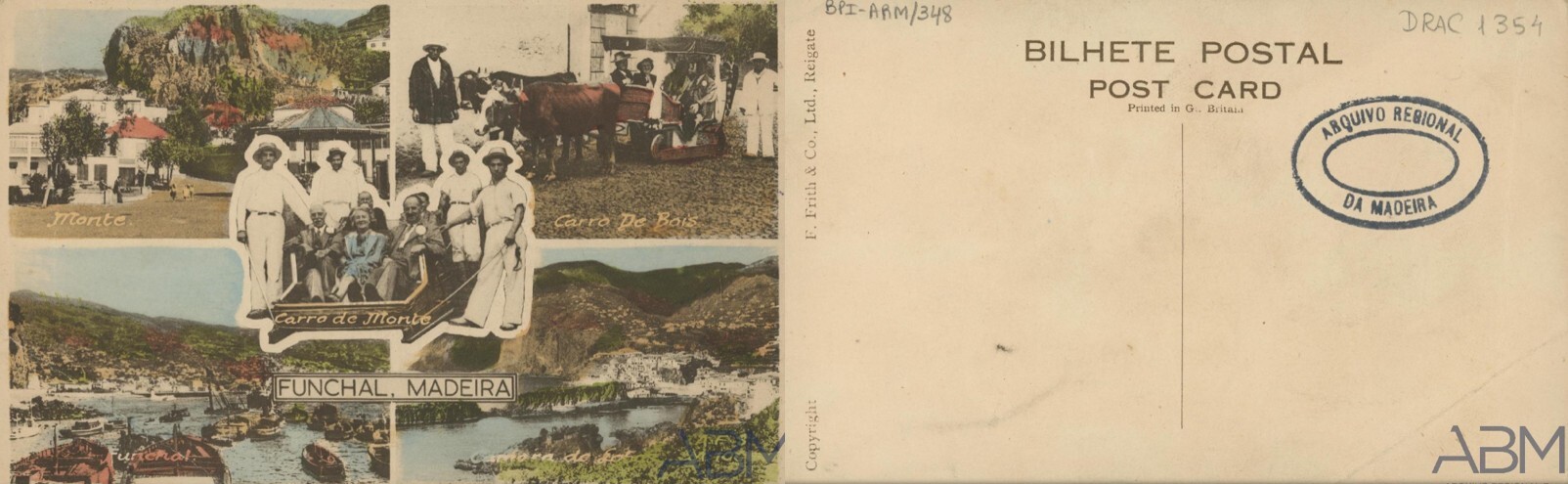
Figure 1 – Wood Postcard: five images in a fantasy frame. You can see the fountain square in Monte, the bay of Funchal, an ox cart with passengers, the bay of Câmara de Lobos and a basket cart with passengers. On the front: “A. F. S. M 106” On the back: “Copyright”; “Francis Frith & Co. Ltd, Reigate”; “Printed in G. Britain” (Source: Madeira Library Collection. Available at: https://arquivo-abm.madeira.gov.pt/viewer/descriptions/766614/2695311 [Consult. June 2026]).
1.1 Site Activities: The salt pans in the lime kiln and the dry fish place
The salt pans (salinas), which give the swimming pool project its name, are a trace of the historical occupation. Arranged on terraces by the sea, the old salt pans were used for artisanal salt extraction. Over time, its use was progressively abandoned, initially due to the industrialisation of salinisation processes.
This border condition of the salt flats site is seen as a transitional system between marine and terrestrial environments, marked by sensitive biodiversity and complex hydrological dynamics, conferring a technical-cultural dimension that architecture needs to respect. The Forno da Cal, today a tourist and historical landmark for Câmara de Lobos, was built in 1874 by Roque Teixeira de Agrela. It is a regional heritage site that played a crucial role in the production of lime in the area.
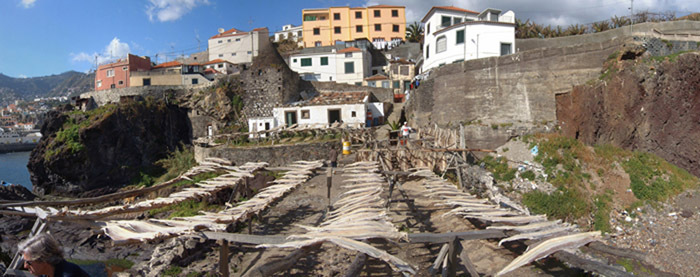
Figure 2 – Drying of Gata Fish in the area of the old Salinas, Câmara de Lobos mid-1990s (Source: unknow. Available at: https://www.publicspace.org/es/obras/-/project/e142-complexo-das-salinas [Consult. June 2026].
1.2 The Neighbourhood of Ilheu
More recently, with the village’s growth and the need to address housing shortages on the island, the Regional Government of Madeira promoted the construction of the Bairro do Ilhéu, a social housing cluster intended to rehouse families in precarious situations. This islet, a flat, medium-altitude area in the Region, was progressively inhabited.
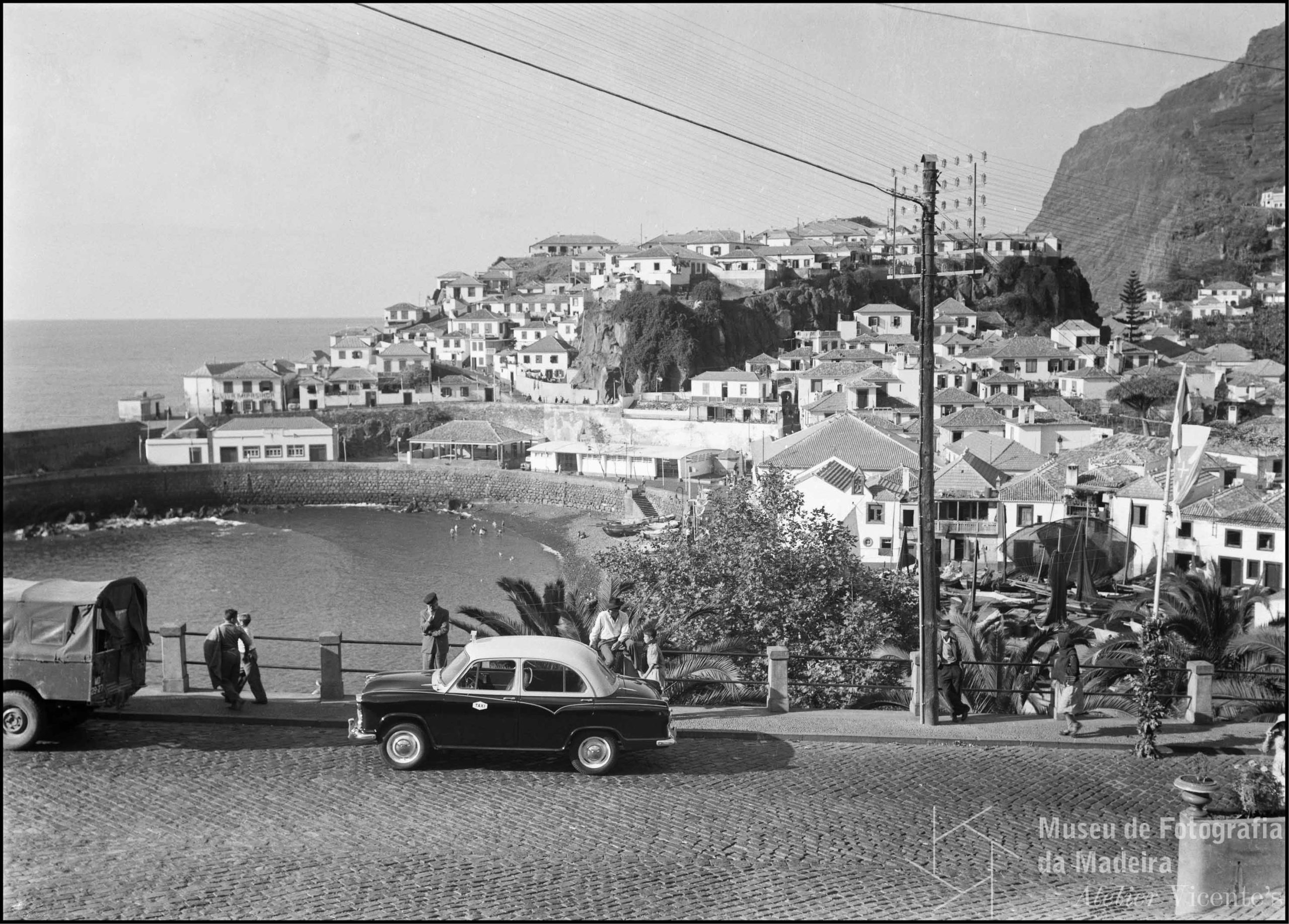
Figure 3 – Bairro do Ilhéu – Social housing in the neighbourhood of Ilhéu, also known as the Bairro dos Pescadores, in the village (current city) of Câmara de Lobos in 1960 (Source: Available at: https://arquivo-abm.madeira.gov.pt/descriptions/1005586 [Consult. June 2026]).
With high population density and low infrastructure in this fishing area, the neighbourhood became, in the following decades, a socially stigmatised territory, with health problems, and one of the highest crime rates on the Madeira island. The degradation of the Ilhéu neighbourhood has become a major urban and social problem, prompting a political decision to proceed with its total demolition. At the same time, a plan was defined for relocating families to new social housing developments distributed across different areas of the autonomous region. Where there used to be a run-down neighbourhood, there is now a garden, “Jardim do Ilhéu”, with a square, leisure areas and a viewpoint.
The Salinas Swimming Pools project is, therefore, part of a broader process of urban regeneration, which sought to return dignity, safety and quality of life to the territory and its population, more than a leisure facility, the project assumes a symbolic role of reconciliation between the community and its coastal territory, proposing a public space accessible to the sea and integrating with the rest of the local urban fabric.
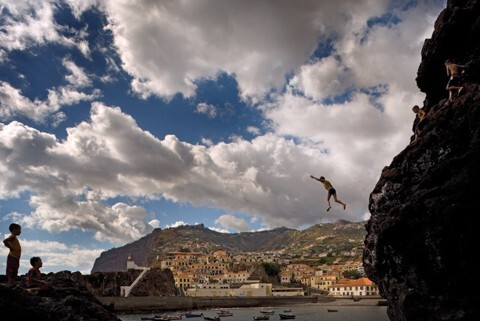
Figure 4 – Children playing in the Salinas Pools Source: Atelier Global Collection. Photo by Fernando Guerra FG+SG (Source: Available at: https://gap.pt/?project=salinas-swimming-pool [Consult. June 2026]).
2. The Drawing: The Salinas de Câmara de Lobos Complex
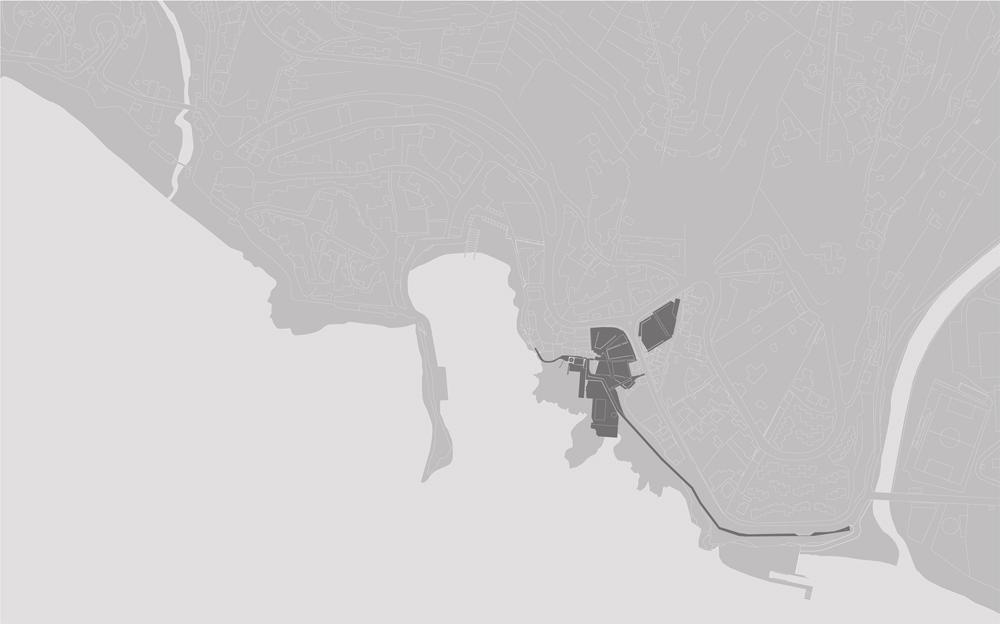
Figure 5 – Highlight map of the intervention of the Salinas de Câmara de Lobos complex. You can see the Camara de Lobos Bay on the left and the Passeio Marítimo on the right (Source: Available at: https://afasiaarchzine.com/2010/07/paulo-david-arquitecto-2 [Consult. June 2026]).
The initiative to create the Salinas Complex came from Sociedade Metropolitana de Desenvolvimento, S.A., an entity that aimed to rehabilitate and enhance urban and coastal areas. The development of the Salinas Complex unfolded in distinct phases, reflecting an organic and responsive approach to the site’s needs and opportunities. Initially, the project was conceived and developed between 2002 and 2004. This first phase focused on creating public swimming pools and a promenade, essential elements for enjoying the coastline. Later, between 2005 and 2006, the project was complemented with the addition of the restaurant, parking and plazas. The work expands on the site’s composition, following the island’s territorial tradition, with the operation achieving a definition through successive walls and platforms, creating an area that can be perceived as an accessible, visually and thematically connected entity. Tuñon has already written that the project aims to address and articulate different aspects, overlapping with the program and enabling autonomous operation (TUÑON, 2008: 6, our translation).
For him, this decision helps reduce the impact of connecting these spaces to a circuit of walkways, giving continuity to an old path by the sea and the city’s bastion, and articulating it as a coastal trail. The complex manages to overcome the elevation discrepancy between the upper and lower levels of the intervention, which totals 54 meters, by inserting platforms sequenced at descending levels, thereby maximising the view of the sea.
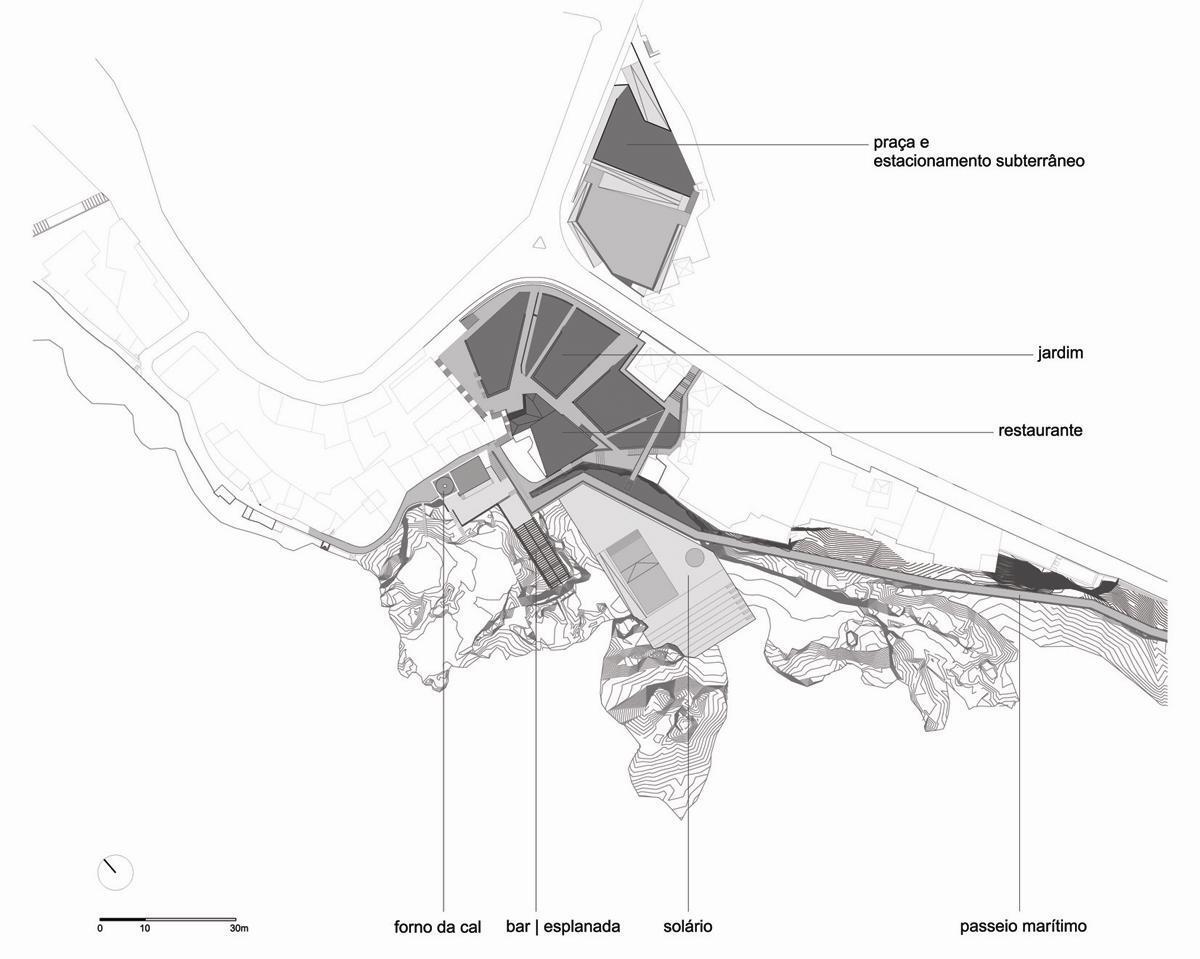
Figure 6 – Upper plane of the Câmara de Lobos Salt Flats Complex (Source: Available at: https://afasiaarchzine.com/2010/07/paulo-david-arquitecto-2/ [Consult. June 2026]).
The program of the Salinas Complex includes a set of infrastructure and public spaces, namely swimming pools for adults and children integrated into the marine environment, a promenade that articulates the complex with the bay and Praia Formosa, and a support bar. The excavation in the slope was designed to support rooms, with changing rooms and sanitary facilities. In addition, there is a restaurant at a higher level than the pools and a parking lot located above the main road.
2.1 The Wall and the Promenade – Connecting Landscapes:
A wall circumscribes and interconnects the salt pan area as a structuring and guiding element of the entire project, used to reorganise the space. This robust wall, which mitigates and supports the steep slope and serves as a primary stabilisation mainstay, also houses some of the project’s programmatic infrastructure. In an interview, Paulo David showed his enthusiasm for the Swimming Pools Project and discussed an orthodox drawing practice in search of pure geometry that contrasts with the place’s sinuosity. Almost describing the wall, Paulo David talked about the Salinas project, saying: “This is not a building above the territory, it is the building that holds the territory, an architecture that clings to the place.” (DAVID, 2025, our transl.)
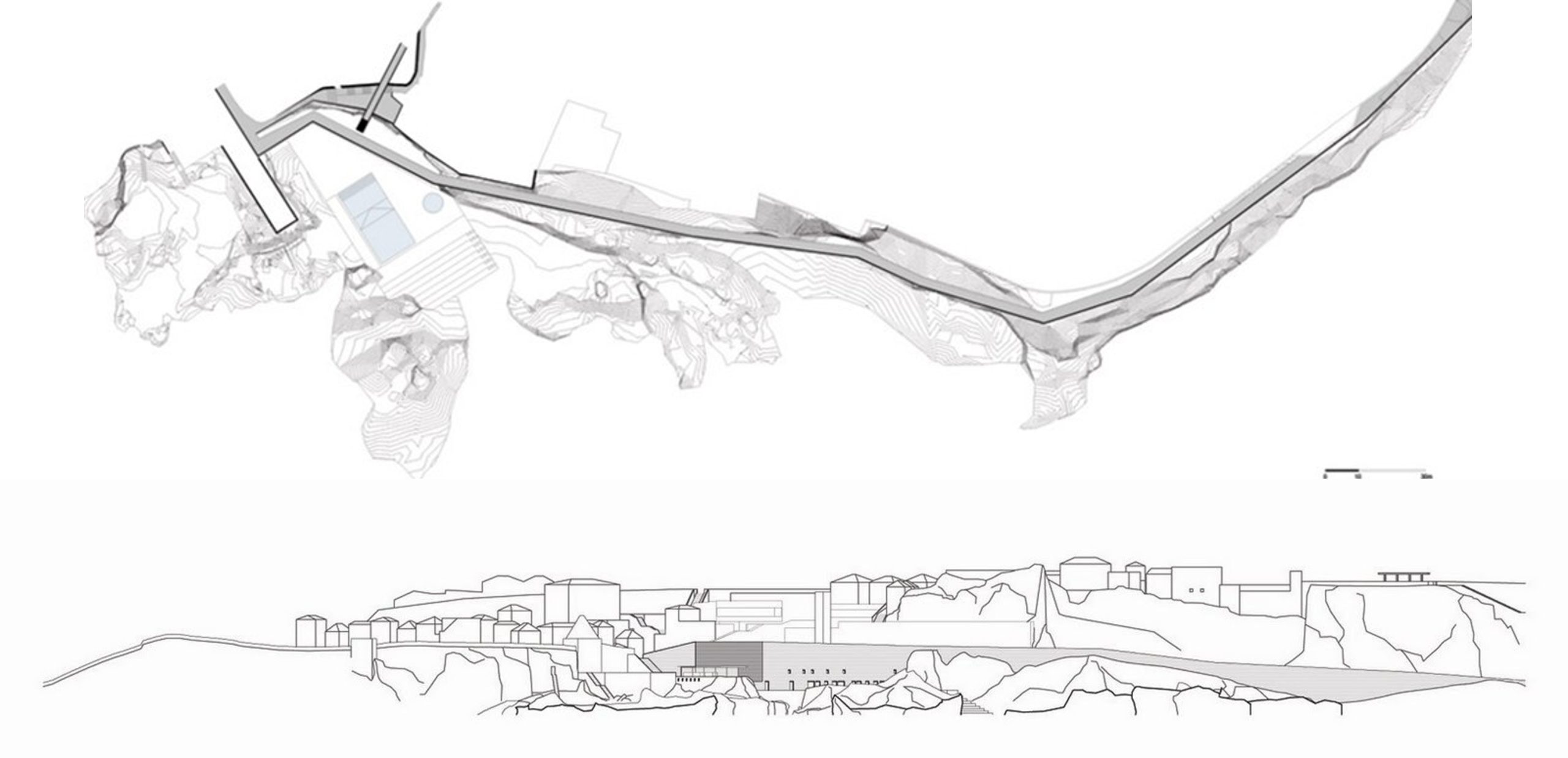
Figure 7 (top) – Upper plane of the first stage of the Salinas de Câmara de Lobos complex. You can see the Promenade, the pool platform, connection with elevator and rectangle of the bar area (Source: Global Available at: https://landezine.com/salinas-swimming-pools-by-global-arquitectura-paisagista/ [Consult. June 2026]). Figure 8 (down) – Elevation of the Salinas de Câmara de Lobos complex. You can see the Promenade, the Wall and the bay (Source: Available at: https://afasiaarchzine.com/2010/07/paulo-david-arquitecto-2 [Consult. June 2026]).
In an interview, landscape architect João Gomes da Silva discusses the engineering challenges encountered in accessing the site. He describes the process by which the project developed in parallel with the work: as excavation equipment gained access to the rugged terrain between the slope and the sea, updated topographic bases were generated, which, in turn, enabled the continuity and detailing of the architectural project.
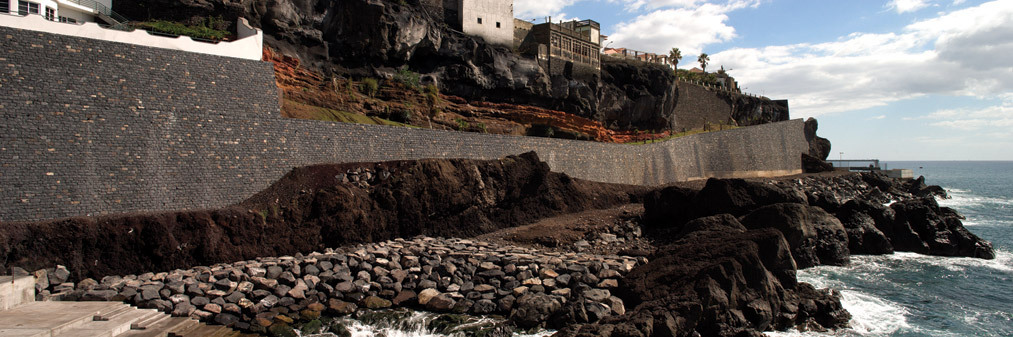
Figure 9 – Image of the Wall, part of the Promenade. Photo by Leonardo Finnoti. You can see the Basalt Wall attached to the slope (Source: https://landezine.com/salinas-swimming-pools-by-global-arquitectura-paisagista [Consult. June 2026]).
The connection of the promenade to the Praia Formosa line creates a strong regional articulation, providing pedestrian mobility along the sea from Funchal to Câmara de Lobos. The path that this wall delimits and runs along from orthogonal lines follows the border between the “coast-sea”. Following the original profile of the territory for 2,200 kilometres, this tour offers varied altitudes, a long walk, and a slow, contemplative arrival at the Pools. It sometimes allows observation of the sea from a geological approach.
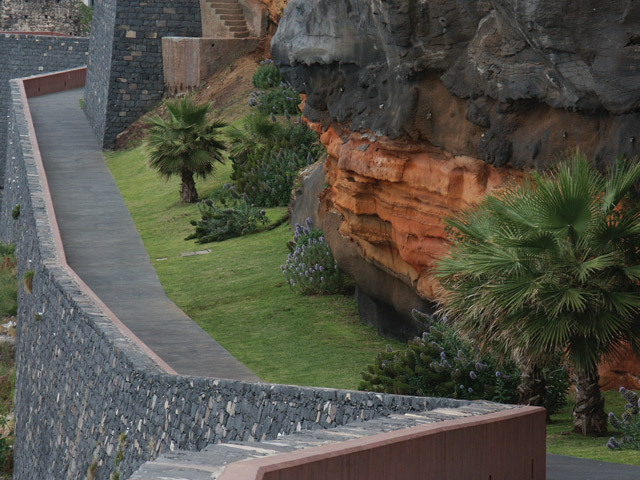
Figure 10 – Image of the Wall part of the Promenade. Photo by Martin Sauter. You can see the rocky wall and its mineral layers (Source: Available at: https://landezine.com/salinas-swimming-pools-by-global-arquitectura-paisagista [Consult. June 2026]).
The floor, a walkable part of the wall, is also structural. In an interview, João Gomes da Silva said that this is a structured concrete element, directly connected to the vertical wall, serving as an element of reinforcement against the traction caused by the force and weight of the earth. The initial design for the retaining wall specified the use of exposed naval concrete. However, the progress of the work and the excavations at the site revealed a substantial amount of basalt, the abundance of which became a determining factor in the construction process. After considering the possibility of discarding the surplus material, the authors, João Gomes da Silva and Paulo David, decided to incorporate it into the project. They would cover the wall entirely with local raw material. The manual execution of this coating proved faster than expected, culminating in a remarkable aesthetic characterised by its monochrome and textural richness. The success of this solution inspired the authors to extend the same aesthetic language to the retaining walls of the landscaped platforms.
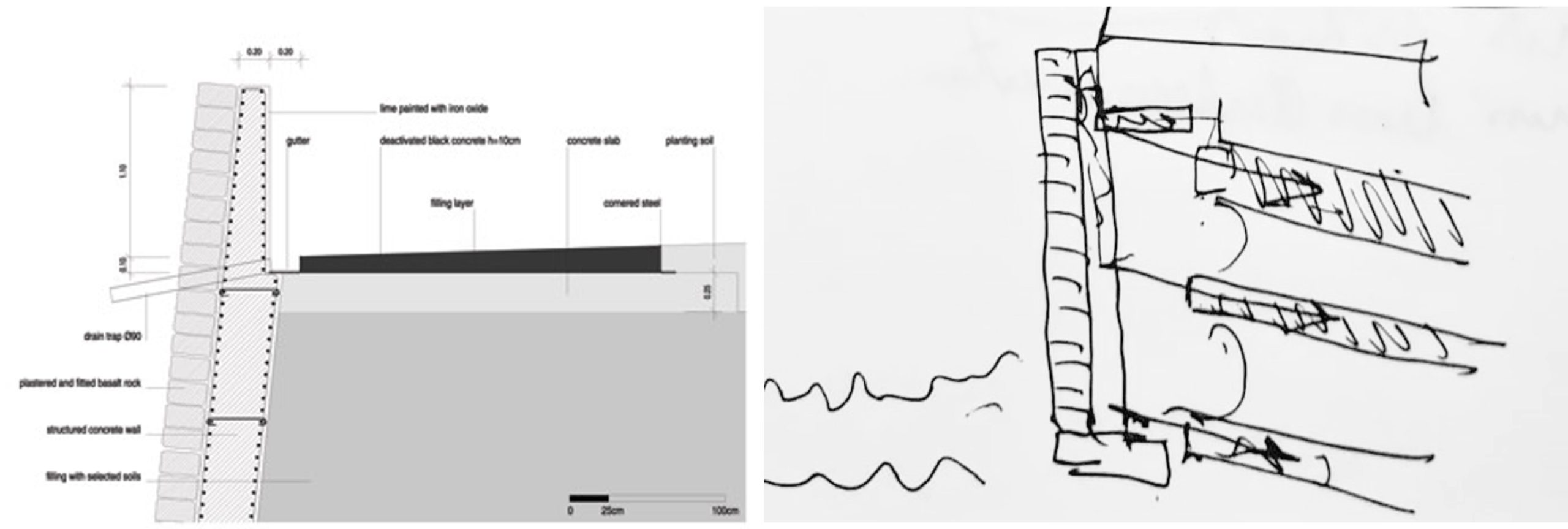
Figure 11 (left) – On the left, a detail of the promenade wall. You can see the structural part in concrete and the part covered in basalt. (Source: Global. Available at: https://landezine.com/salinas-swimming-pools-by-global-arquitectura-paisagista [Consult. June 2026]). Figure 12 (right) – The sketch of the structural part of the wall, made by João Gomes da Silva in an interview with the author. You can see the structural part in concrete and the part covered in basalt (Source: Author’s internal communication).
To demarcate and differentiate the materials, an oxide-red colour was applied to the promenade pavement, creating a clear distinction between concrete and basalt. Such pigmentation not only enhances the visual contrast with the maritime and rocky landscape but also serves as an ordering element, reinforcing the route’s orthogonal geometry.
Gonçalo Byrne, in his text about Paulo David’s architecture, “Un Archipielago de piensamientos”, writes:
“In the gradual approach to the pools of the Atlantic or the Casa das Mudas, formal systems and materialisations are identified that seem to derive from the natural matrix, transforming, however, these suggestions opened up to other, sometimes unexpected experiences” (BYRNE, 2008: 6, our transl.).
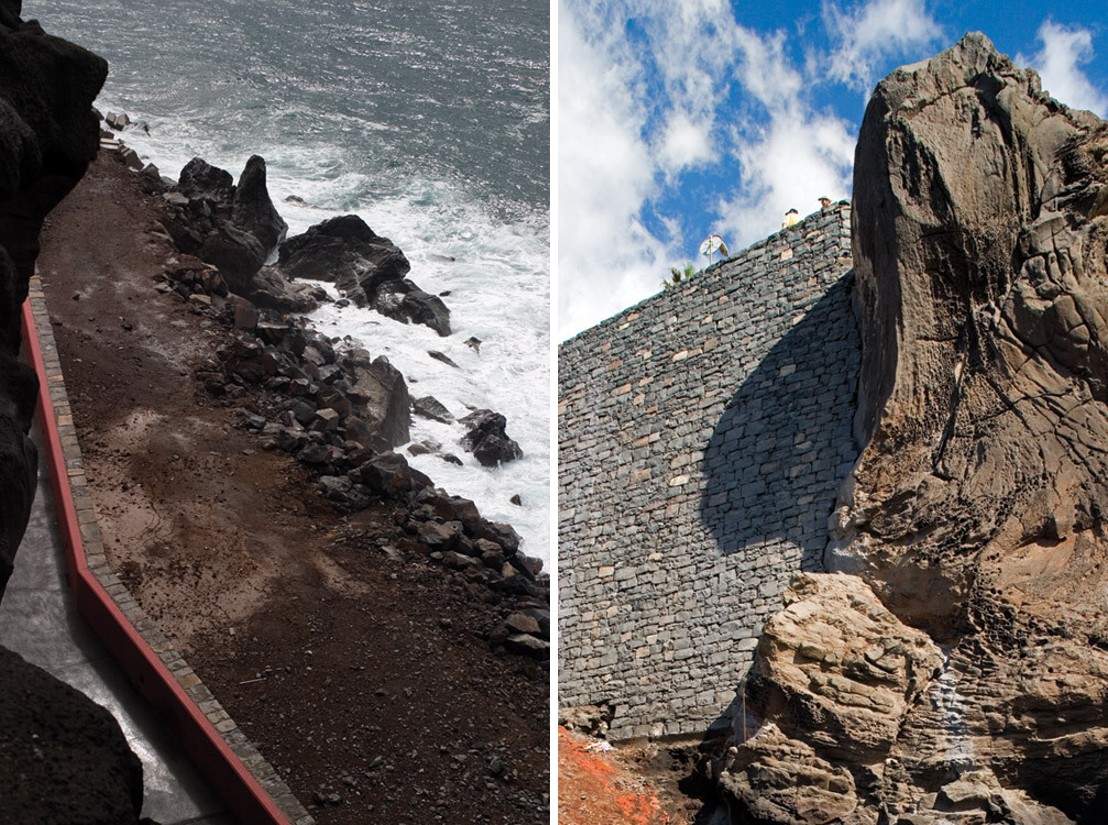
Figures 13 and 14– Two Photos by Leonardo Finotti. You can see the promenade and the wall. The structural part of the concrete is painted in oxide red, the sidewalk in raw concrete, with basalt coating and, in the background, the natural stones and the sea (Source: Available at: https://landezine.com/salinas-swimming-pools-by-global-arquitectura-paisagista [Consult. June 2026]).
2.2 The Route – An approach to the sea
The organisation of the pedestrian paths is one of the project’s most elaborate responses to the topographical challenge.
The land has a difference of about 54 meters between road level and sea level, which required the creation of a system of diverse vertical and horizontal access routes.
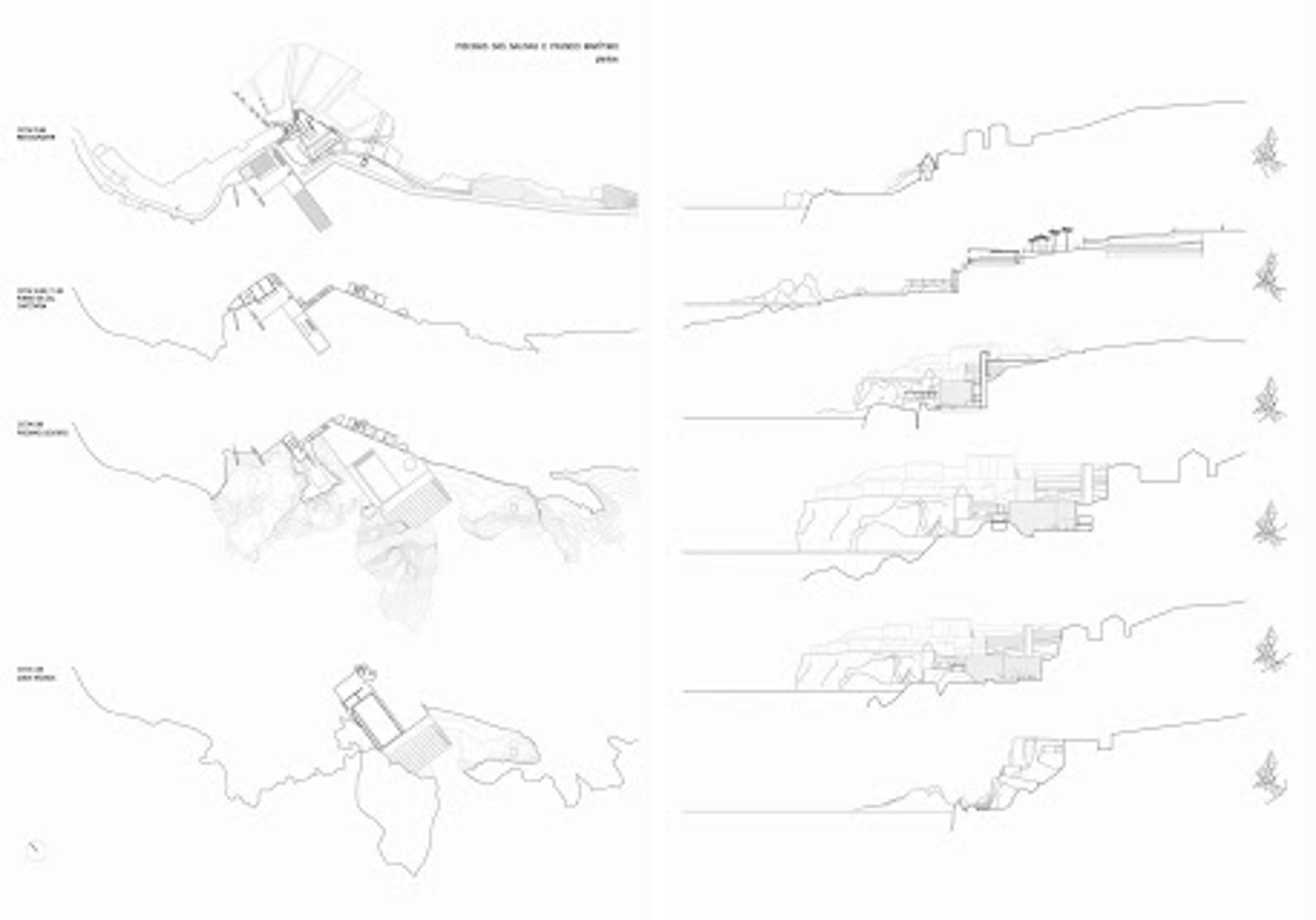
Figure 15 (left) – Upper plants of the Salinas complex at different levels (Source: Afasia Arvhzine. Available at: https://afasiaarchzine.com/2010/07/paulo-david-arquitecto-2 [Consult. June 2026]). Figure 16 (right) – Sections of the Salinas complex (Source: Afasia Arvhzine. Available at: https://afasiaarchzine.com/2010/07/paulo-david-arquitecto [Consult. June 2026]).
Among the adopted route solutions, the underpass, designed by João Gomes da Silva, stands out as particularly relevant. Originating in the parking area, this passage was installed at a lower level, and crosses the ER101 road (Câmara de Lobos Road), as shown in the second schematic section. The route culminates at the start of the garden platforms, at an elevation of approximately 27.5 meters, and continues to the sea. The main function of this infrastructure is to separate pedestrian and vehicular traffic, ensuring a safe and gradual transition to the leisure area. At the exit point, the tunnel provides a frame for the panoramic view of the vineyards that make up the garden, articulating a connection with the different ways that lead to the seafront.
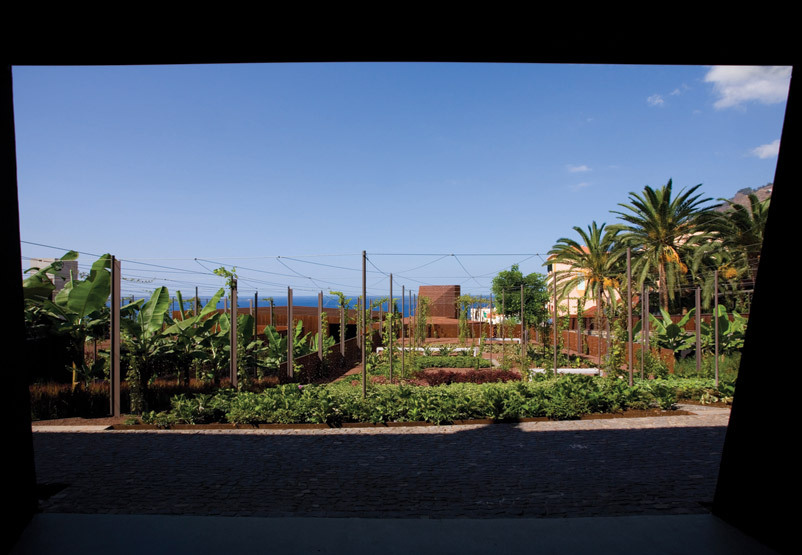
Figure 17 – Exit from the parking tunnel to the 27.5m Salinas Complex. Source: Global Landscaping. Photo by Fernando Guerra FG+SG promenade (Source: Global Landscaping Collection. Available: https://gap.pt/?project=salinas-swimming-pool [Consult. June 2026]).
In addition to the system of paths, architect Paulo David conceived a suspended passage as a second access to the complex. This walkway establishes a direct and horizontal connection between the road level and the central elevator. This constitutes the main vertical circulation element of the project, with a concrete monolith that connects the upper arrival level with the lower platform of the pools. Aesthetically, this volume goes beyond mere utility, as its verticality contrasts with the landscape, serving as a referential landmark; logistically, it becomes an ordering axis around which the routes are oriented, allowing visitors to visually map the space.
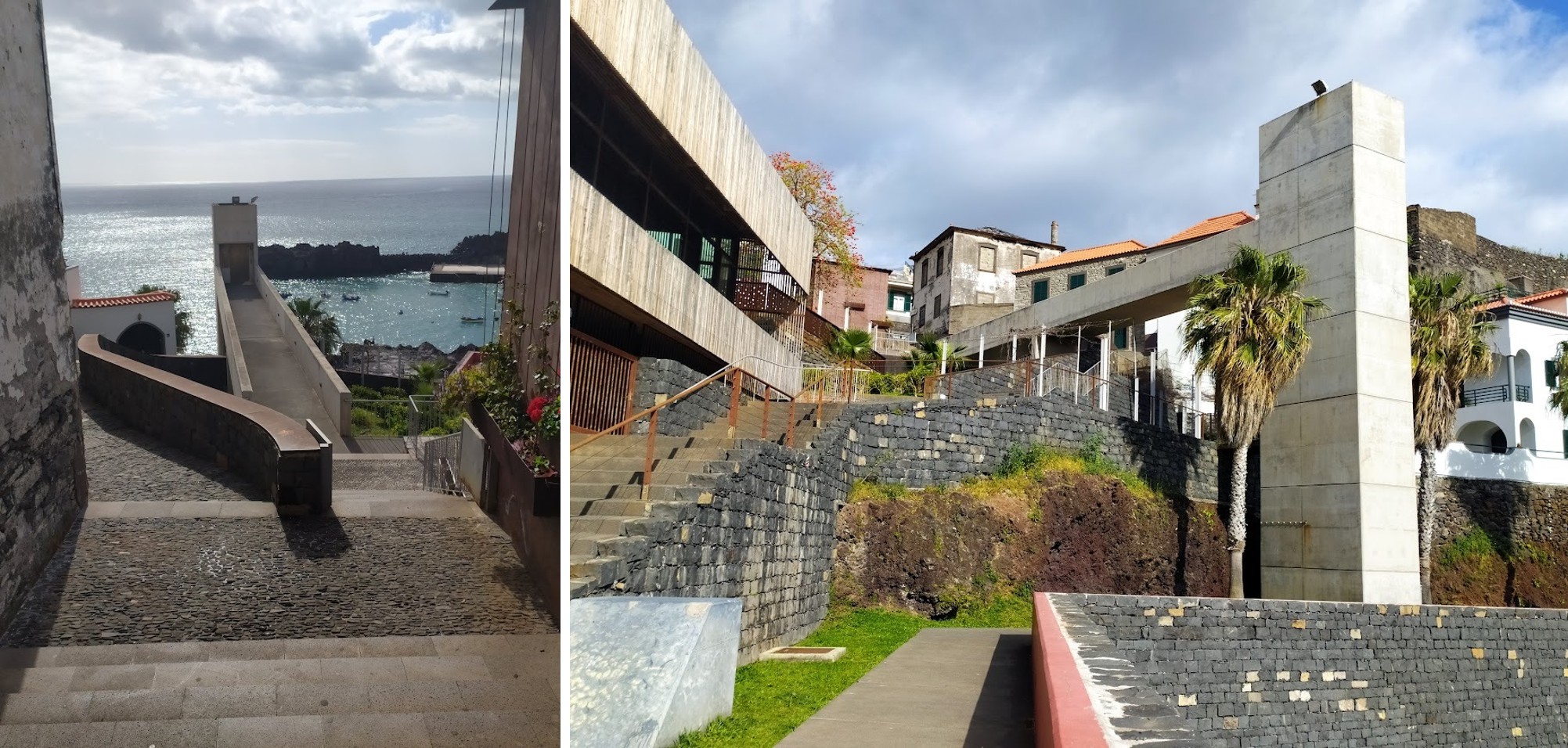
Figures 18 and 19 – Photo of the elevator and the beginning of the promenade (Source: Global Landscaping Collection. Presentation by the author).
Continuing the analysis of the accesses, the topographic unevenness is not restricted to the elevator but is complemented by a dynamic and articulated system of ramps and staircases. This system is designed to offer alternative routes and distinct spatial experiences. The ramps, with slopes calculated to ensure universal accessibility, promote a fluid and contemplative descent, while the stairs serve as faster connection vectors, whose linearity is intentionally interrupted by rest levels treated as “viewpoints,” offering moments of relaxation and enjoyment.
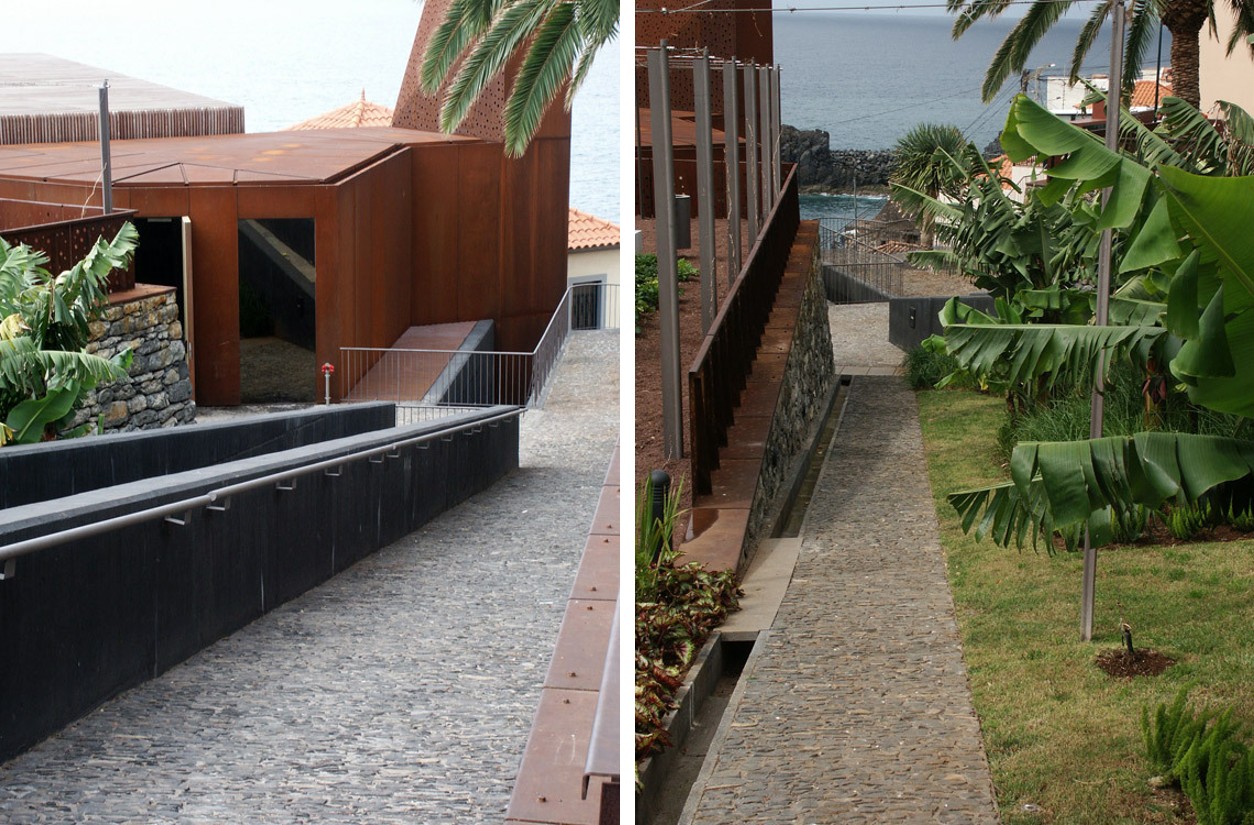
Figures 20 and 21 – Ramps of the routes between the platforms. Salinas Complex in Câmara de Lobos. Photo by Martin Sauter (Source: Landezine. Available at: https://landezine.com/salinas-swimming-pools-by-global-arquitectura-paisagista/ [Consult. June 2026]).
In his proposal for the gardens, landscape architect João Gomes da Silva chose to retain the channels that lead to the watercourses adjacent to the retaining walls, which define the planting platforms. When analysing the routes and vegetation, we realised a clear design guideline: to flank the ramp with the gutter that houses the main pre-existing Levada (irrigation channel), while another is accompanied by a sloping plateau with banana trees.
The analysis of the site’s hypsometry and topographic survey, prior to the intervention, reveals that these waterways were already a striking feature of the terrain. Paulo David and João Gomes da Silva’s design strategy consisted of reorganising the spaces, respecting and integrating the Levadas into the new pedestrian paths. This decision demonstrates an approach to the structural reception of the territory, in which the existing water infrastructure is reinvested. In addition, the constant presence of water along the walk enriches the user’s sensory experience, gradually introducing the aquatic element before arriving to the ocean.
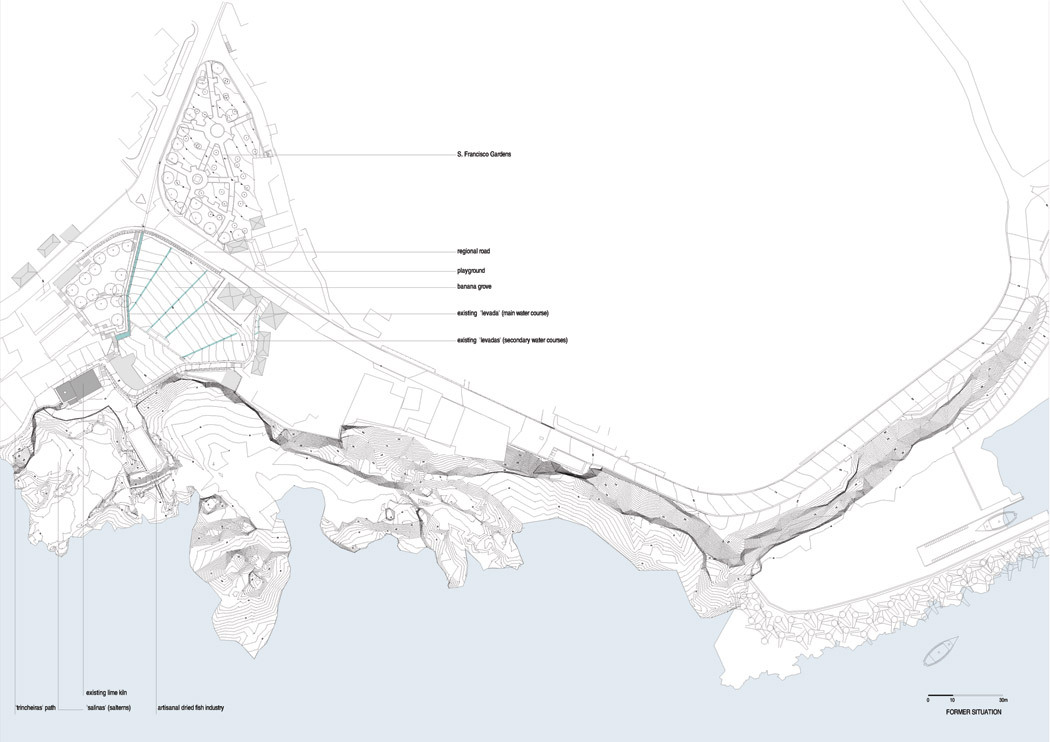
Figure 22 – Survey map of the site before the Intervention (Source: Global Landscaping Collection. Available at: https://landezine.com/salinas-swimming-pools-by-global-arquitectura-paisagista/ [Consult. June 2026]).
2.3 Staircases
The main staircase is different from the others by its location and symbolic function, being the terminal element of the terrestrial route. Positioned on the platform of the pools, this monumental structure was designed to receive the sea, allowing the waves to advance over it in a controlled, poetic manner. With steps approximately two meters wide, the staircase dissolves the rigid boundary between architecture and the ocean, functioning as a large amphitheatre whose stage is the seascape itself. There is also an interior staircase built into the slope, providing. access to the changing rooms and the pool platform This staircase is most commonly perceived as a vaulted tunnel that resonates with the place’s mystique. In this passage, the staircase becomes a sensory path, evoking a rite of passage between the terrestrial and the aquatic realms.
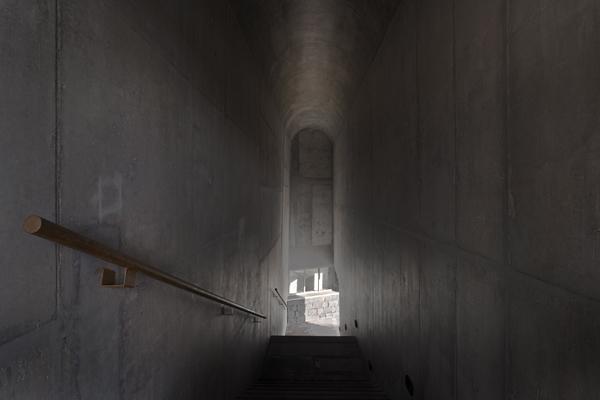
Figure 23 – Stairs for changing rooms and swimming pools. Photo by Fernando Guerra FG+SG. (Source: 2G, n.º 47: 44).
There is another basalt staircase, fundamental to the circuit, located behind the bar’s pavilion, which connects the user to the wildest landscape of the place. It promotes integration with a radical, pure geology, generating a sensory connection with the wind, the sea, and the rock.
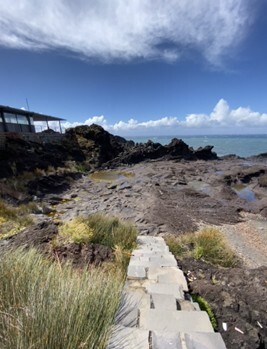
Figure 24 – Staircase to the area of the old salt pans of Câmara de Lobos. You can see the Bar and the Atlantic (Source: the author’s visit to the site in May 2025).
2.4 Inscribe and excavate: The Platforms
The formal reading of the Salinas Swimming Pools project cannot be dissociated from its inscription in the territory. This is not an autonomous volumetric composition, nor a set of architectural objects highlighted against a natural background. On the contrary, the architectural form emerges as a continuation of the coastal morphology, through a process of geographical infiltration rather than implantation.
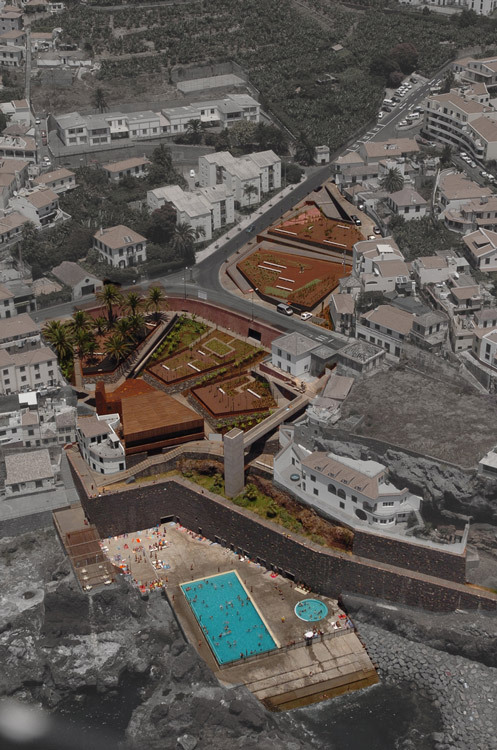
Figure 25 – Image of the salt pan complex. Aerial view (Source: Global Landscaping Collection. Available at: https://landezine.com/salinas-swimming-pools-by-global-arquitectura-paisagista [Consult. June 2026]).
The set is developed by platforms that adapt to the existing topography. Some are inserted between old retaining walls or take advantage of existing terraces, others are built from a logic of continuity with the original layout of the salt pans.
These platforms serve as a functional and spatial basis for the different uses: areas of permanence, circulation and access to the sea. They are designed with a logic of topographic adaptation, responding to the natural slope, and avoiding large earth movements. The platforms’ geometry is orthogonal and controlled, serving as a counterpoint to the rocky landscape’s irregularity.
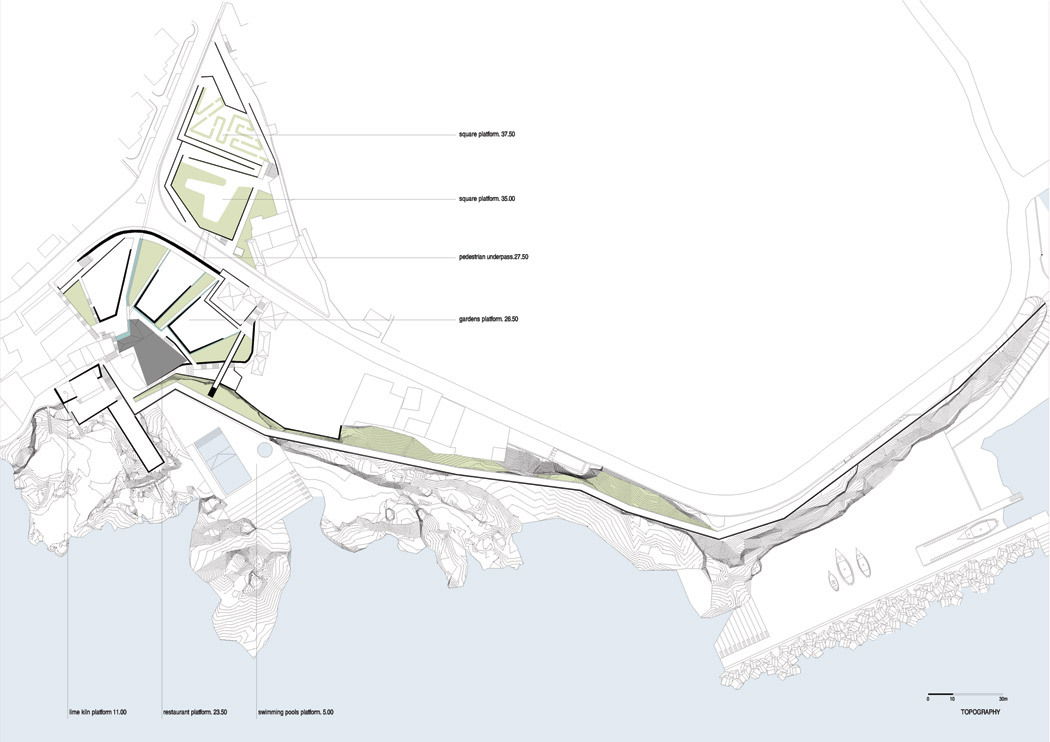
Figure 26 – Upper Plane Complex of the salt pans. You can see the platforms and their levels in sequence (Source: Global Landscaping Collection. Available at: https://landezine.com/salinas-swimming-pools-by-global-arquitectura-paisagista [Consult. June 2026]).
As Emilio Tuñón writes: “Paulo David’s architecture is designed by subtraction, as if excavating the land with archaeological care, revealing more than imposing” (TUÑON, 2008: 9 our transl.).
This excavation is not only metaphorical. In many cases, the structures of the complex were literally dug into the ground, following the natural slope of the rocks and, whenever possible, reusing the existing stone. The straight lines of the platforms contrast with the cliff’s irregularity, creating a clear element that organises the space.
The authorship of Global Landscaping, conducted by João Gomes da Silva and Inês Norton, marks the intervention with the precision of someone who understands the landscape as a structure rather than a surface. The landscape is a fundamental part of the spatial and cultural construction of the place, through the design of the territory, bringing vegetation and the paths as a device that organises the time, use and perception of the place.
The landscaping project starts with the area’s pre-existing agricultural use, featuring small crops such as vines and bananas. Instead of erasing this rural dimension, landscaping recovers and reinscribes it within the system of the new public bathing space. In the words of João Gomes da Silva himself: “The landscape is not just deep here. It is matter, history and system. The drawing starts from what already existed and builds continuity.” (SILVA, 2019: 114).
The sectorization of the set is clear and precise, structured in three main levels, each with distinct but articulated functions. On the upper level, facing the road and the entrance to the complex, a reception square is defined, where the main access, parking and the transition between the village and the sea are articulated. This square, although mineral, is punctuated by small plant units that mark the limits of the route and create punctual shadows. When analysing the landscaping from its beginning at an elevation of 37.5m, an orthogonal, labyrinthine design is observed, followed by a system of contemplative ramps leading to the second platform, already at an elevation of 35m, which is directly connected to the road level. Structurally, these two squares serve as a cover for the underground parking lot, a programmatic need of the complex.
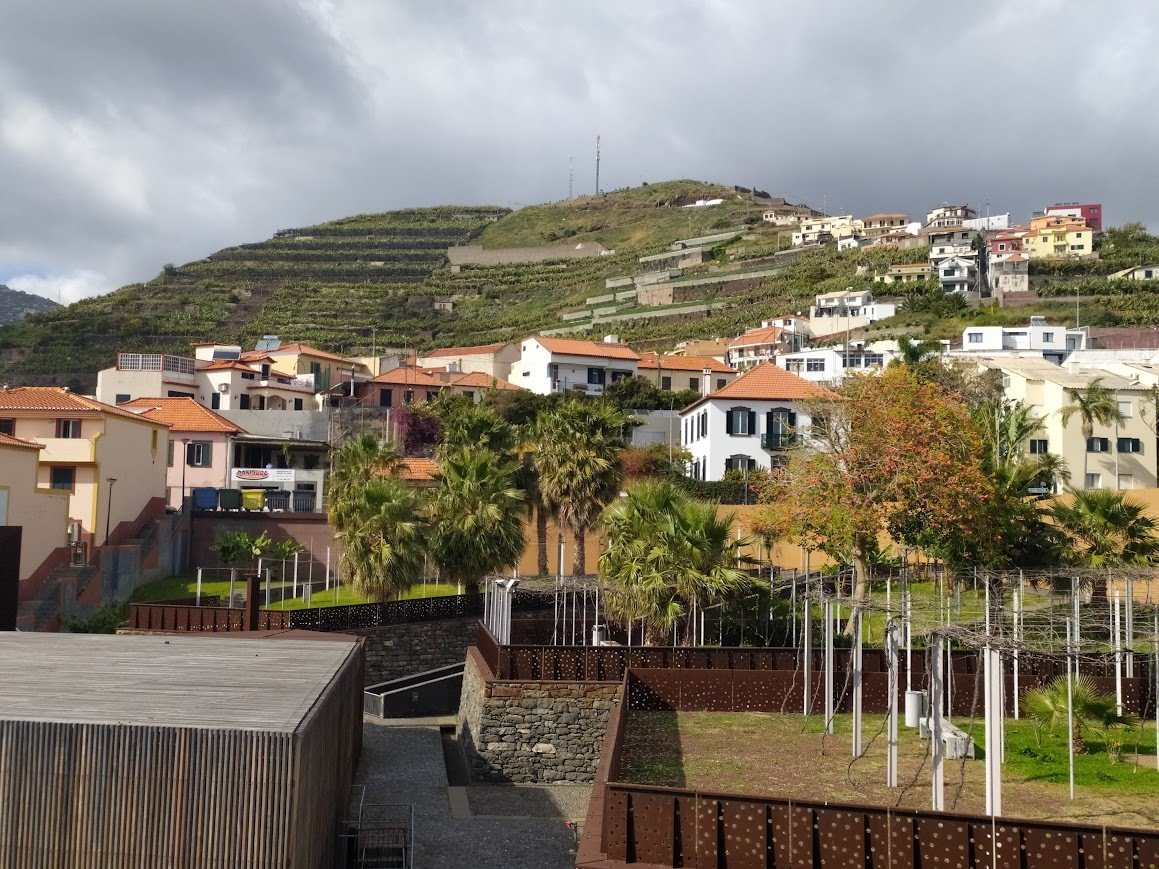
Figure 27 – Images from the platforms (Source: Global Landscaping Collection, direct communication with the author)
These Platforms emerge as an element of the sectorization of space, allowing stairs and ramps to pass between them, thereby suggesting and demarcating the paths and connections for both the horizontal and vertical circuits. This design approach, with the staggered platforms, provides panoramic views as the user travels through the slits intended for the paths.
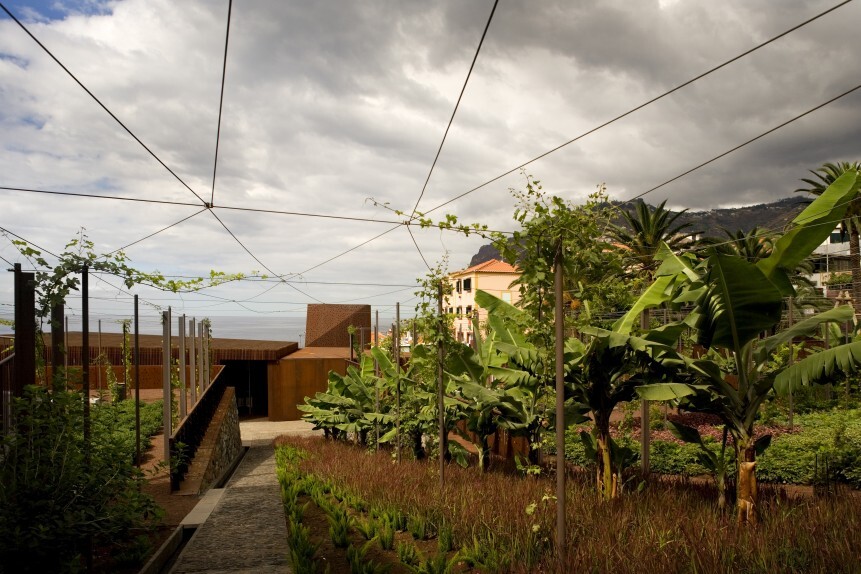
Figure 28 – Landscaping platforms Câmara de Lobos Complex. Photo by Fernando Guerra FG+SG (Source: Global Landscaping Collection. Available also at: https://gap.pt/?project=salinas-swimming-pool [Consult. June 2026]).
Continuing the circuit at an intermediate level, the second platform, with denser vegetation, returns to the island’s own flora. There, banana trees and vineyards are preserved on low terraces, rescuing the place’s agricultural memory and serving as a pedagogical and sensory device.
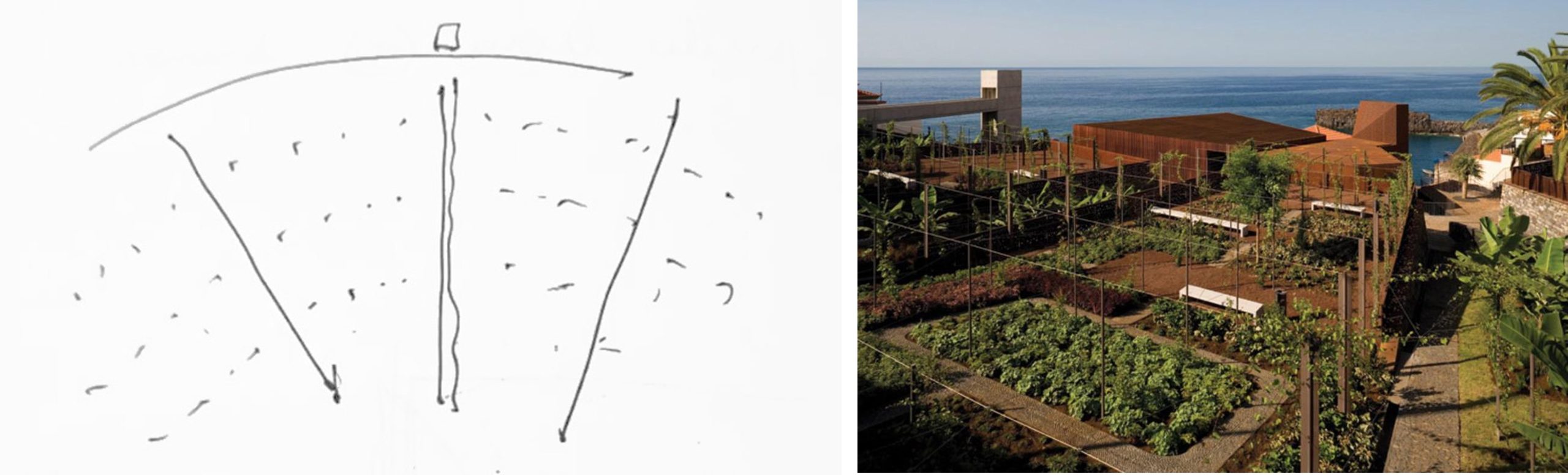
Figure 29 (left) – Sketch made by João Gomes da Silva, during an interview with the author. Landscaping and platforms of the Salinas de Câmara de Lobos Complex. Figure 30 (right) – The Gardens. Photo by Fernando Guerra FG+SG (Source: Global Landscaping Collection. Available also at: https://divisare.com/authors/55793-paulo-david/projects/built [Consult. June 2026]).
The textures of the soil, gravel, compacted earth, and washed concrete vary to mark the pace of the route, and the vegetation is used to provide shade. On the lower level, the bathing platform is organised, with minimal landscape design, limited to marking low planting lines and the punctual presence of resistant coastal vegetation. Here, architecture takes on greater prominence, but the landscape reading remains. The pavement, walls and accesses are designed as extensions of the ground, and the sea is treated as the central element of composition.
The overall strategy of landscaping is not to create a garden, but to extend the existing landscape structure. As João Gomes da Silva states: “What is built is the possibility of permanence. A new nature is not introduced, but what the place already offered in potential is extended.” (SILVA, 2019: 119)
One can subtly perceive an ordering of the territory by sectorizing the whole according to the soil’s original vocation: resting, cultivation, and bathing. The landscape design reinforces the legibility of the place, allowing visitors not only to enjoy the space but also to understand it.
2.5 The concrete platform: Between the ground and the waterline.
The concrete platform of the Salinas Swimming Pools is the project’s main structural element, articulating the site’s various topographic levels with a continuous, durable, and functional surface. Located on the old salt pan area and adapted to the irregular morphology of the cliff, this horizontal base allows the organisation of access to the sea, the design of the areas of permanence and the integration of the saltwater tanks for bathing.
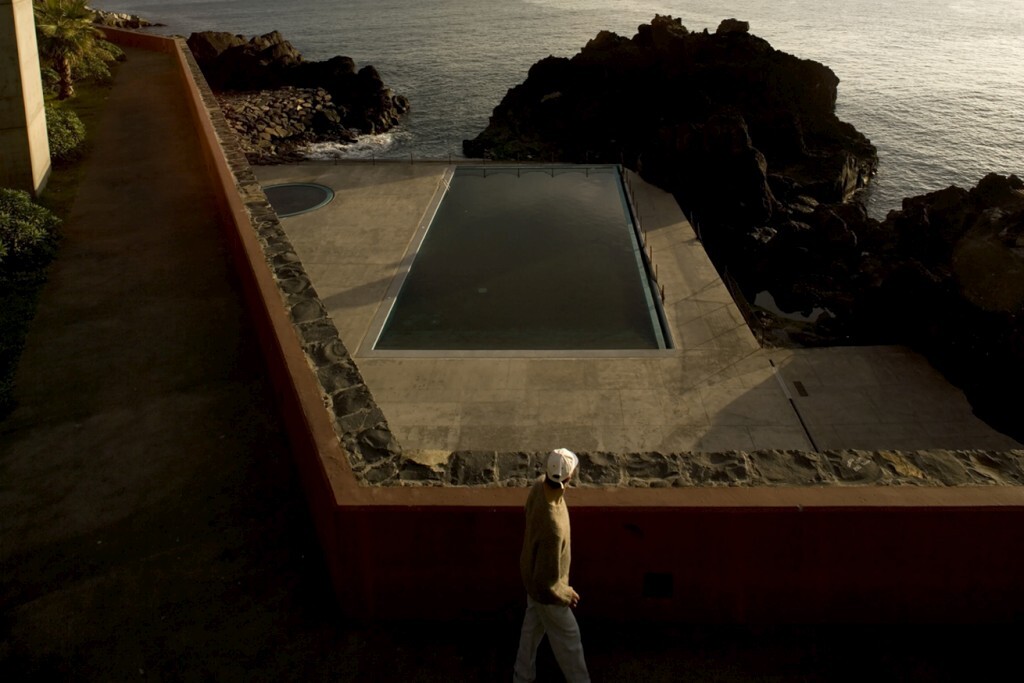
Figure 31 – Pool platform. Photo by Fernando Guerra (Source: Global Landscaping Collection. Available at: https://afasiaarchzine.com/2010/07/paulo-david-arquitecto-2/#google_vignette [Consult. June 2026]).
Formally, the platform is presented as a linear, refined plane with a contained thickness, designed to minimise the visual impact and maximise continuity with the surrounding landscape.
David’s architecture is characterised by an intrinsic relationship with the terrain: he draws with the topography, excavates and designs to the rhythm of the slopes and dialogues with the sea and the winds. As Gonçalo Byrne observes:
“His works are perceived almost as geological formations, in which formal containment accentuates the unitary and compact perception of a stratification of overlapping planes, which in turn reveal the variation and complexity of interior voids, hierarchized around solid structural references” (BYRNE, 2008: 6, our transl.)
In the Salinas Swimming Pools, this positioning reaches perhaps one of its most refined expressions: there is no building there in the traditional sense. There is place, form, matter. An architecture that blends with the landscape because it is born from it and dissolves in it.
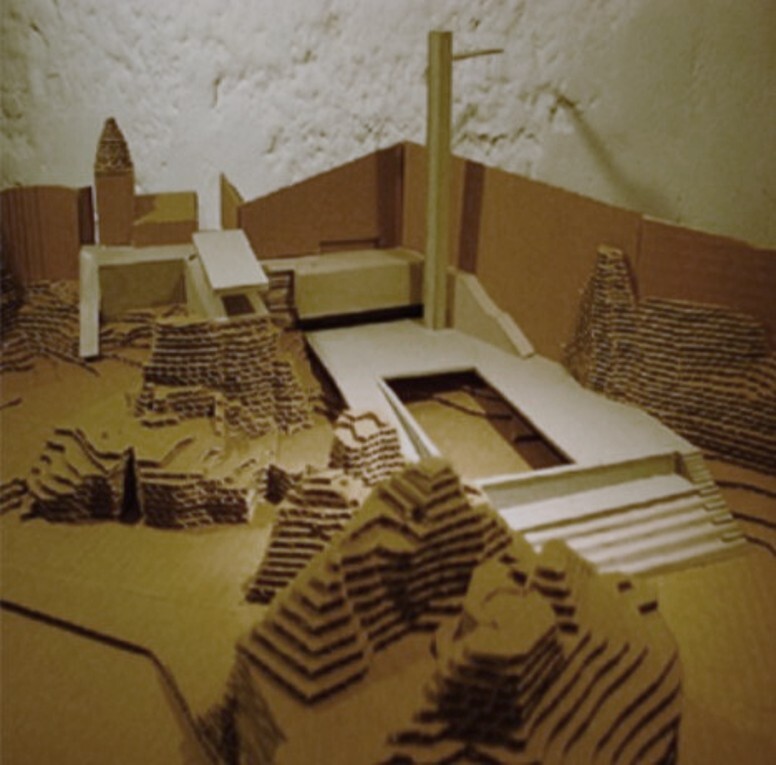
Figure 32 – Model of studies of the Swimming Pools. The retaining wall of the territory is visible, continuing as a connection to the promenade. Madeira Funchal (Source: Kplano Engenharia. Available at: https://kplano.com/site/ [Consult. June 2026]).
The platform is organised as a functional system, distributing the living areas, access to the tanks, outdoor showers, and surveillance points. At certain points, it extends to the sea, functioning as a viewpoint or diving area. In others, it is retracted, forming wind-protected corners where users can stay. There are no shade elements or fixed furniture, allowing for flexibility and promoting adaptation to climatic variation.
By organising the space around this continuous platform, the project gives the whole legibility and unity, allowing the visitor a clear reading of the paths and uses, while reinforcing the horizontality of the architectural feature in a context dominated by the cliff’s abrupt verticality.
In the words of João Gomes da Silva, it is a “drawing that teaches how to look” (SILVA, 2019: 97). And in fact, the platform guides the gaze: to the outline of the cliff, to the design of the houses at the top of the slope and to the maritime horizon. Almost a negative stage, the protagonist is in a landscape, and the architecture supports it. This result is achieved through a silent rigour, no excessive curve, no decorative elements, only the essential lines.
The platform also becomes a place of temporal transition: it resumes the ancestral vocation of the place of extraction, of exposure to the sun, of transformation by water. Today, instead of salt, it is the body that rests and transforms itself there. Architecture, preserve the time of permanence, of waiting, of the natural return of the slope.
2.6 Pavilion and Volume- The restaurant in the complex
The complex’s restaurant is one of the project’s main programmatic volumes and is located on one of the upper levels of the platforms, with a clear view over the Atlantic Ocean. Its positioning is strategic: it establishes a point of permanence and contemplation, functioning as a transition between the sequence of routes and the living and bathing areas.
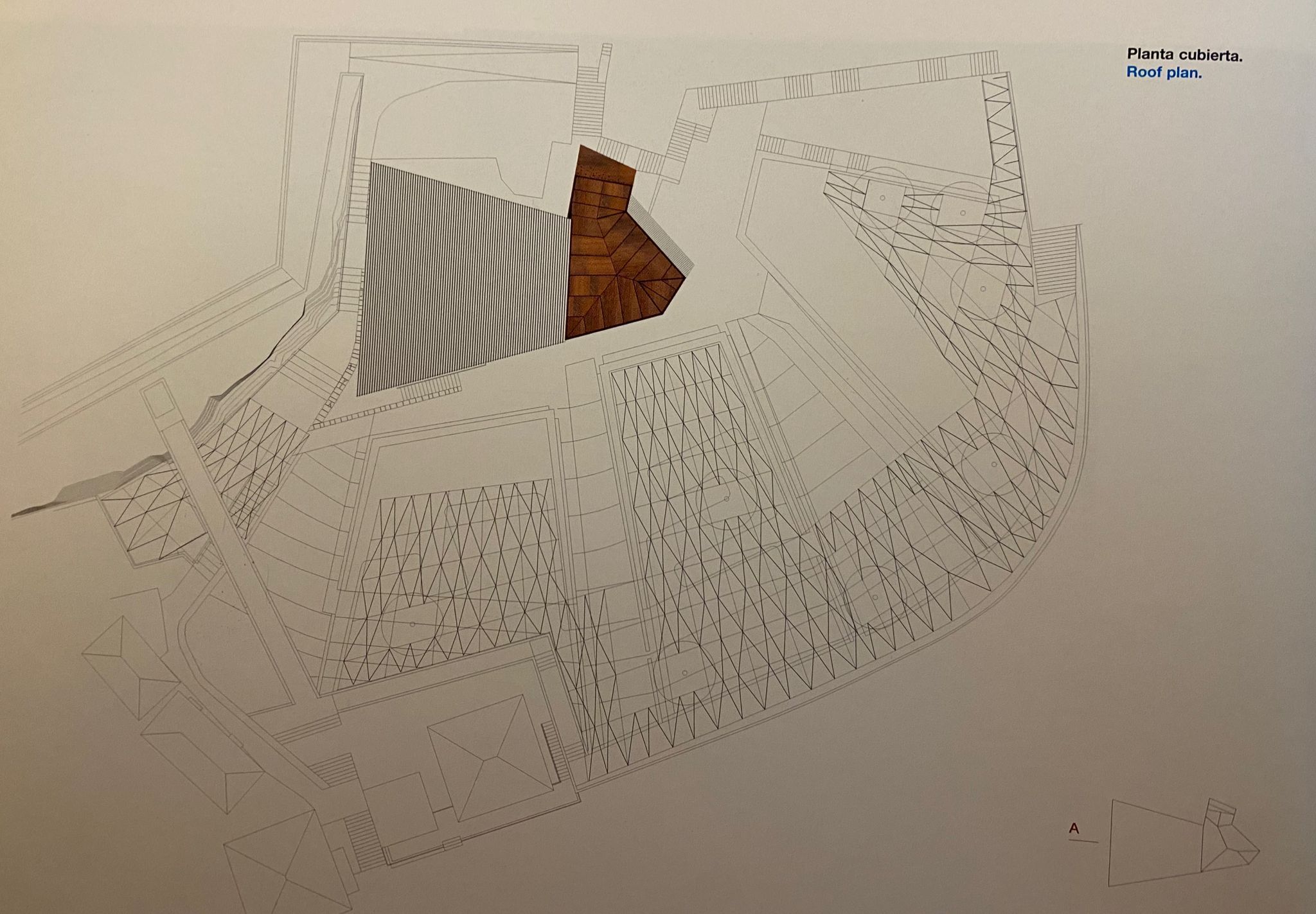
Figure 33 – Upper plane of the Restaurant. Paulo David Architecture (Source: 2G n.º 47: 53).
Formally, the building follows the same language as the ensemble: pure geometry, raw materials, careful insertion into the topography. The main structure is in exposed concrete, with well-defined vertical and horizontal planes. The volume is partially buried, with a cantilevered section over the lower platform, which reinforces the feeling of lightness and openness towards the sea.
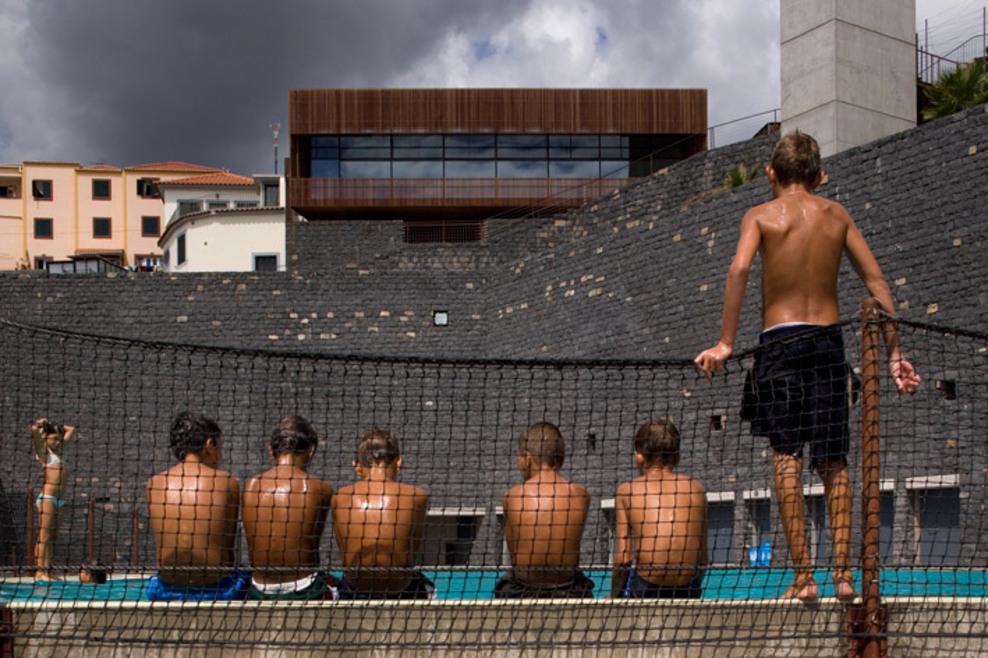
Figure 34 – Restaurant. Photo by Fernando Guerra FG+SG (Source: Global Landscaping Collection. Available at: https://divisare.com/projects/94781-global-arquitectura-paisagista-paulo-david-fernando-guerra-fg-sg-leonardo-finotti-piscinas-nas-salinas#lg=1&slide=13 [Consult. June 2026]).
One of the most striking aspects of the restaurant is the use of steel in the exterior cladding and sun protection systems. The natural oxidation of this material gives the building earthy tones that dialogue with the mineral layers exposed on the escarpment, promoting visual continuity with the rocky environment. Faced with the materiality of light and its revelatory capacity from the chosen materials, Byrne writes about Paul’s architecture:
“The cyclical variation of natural light becomes the essential physical substance of the project, in contrast to the constant and unchanging nature of artificial lighting. It is a fundamental instrument of the spatio-temporal experience of architecture” (BYRNE, 2008: 8)
From a functional standpoint, the restaurant features a glazed interior space and a covered outdoor terrace, allowing different uses depending on the season and climate. The transparency of the façade allows for a continuous reading of the landscape, without visual obstructions, reinforcing the idea that this is a place of observation and rest.
2.7 The design of Sal: The Bar Pavilion
Separated from the restaurant but complementary in the logic of use, the bar pavilion is located on one of the intermediate platforms. The horizontal proportion of the volume, combined with its constructive lightness, naturally inscribes it in the design where one of the old salt pans of the place used to be.
The construction is in exposed concrete, with coatings and structural elements in cut steel, reinforcing the set’s material palette and its durability against sea air. The pavilion is organised into two bodies: a closed technical area and a covered terrace space, facing the sea.
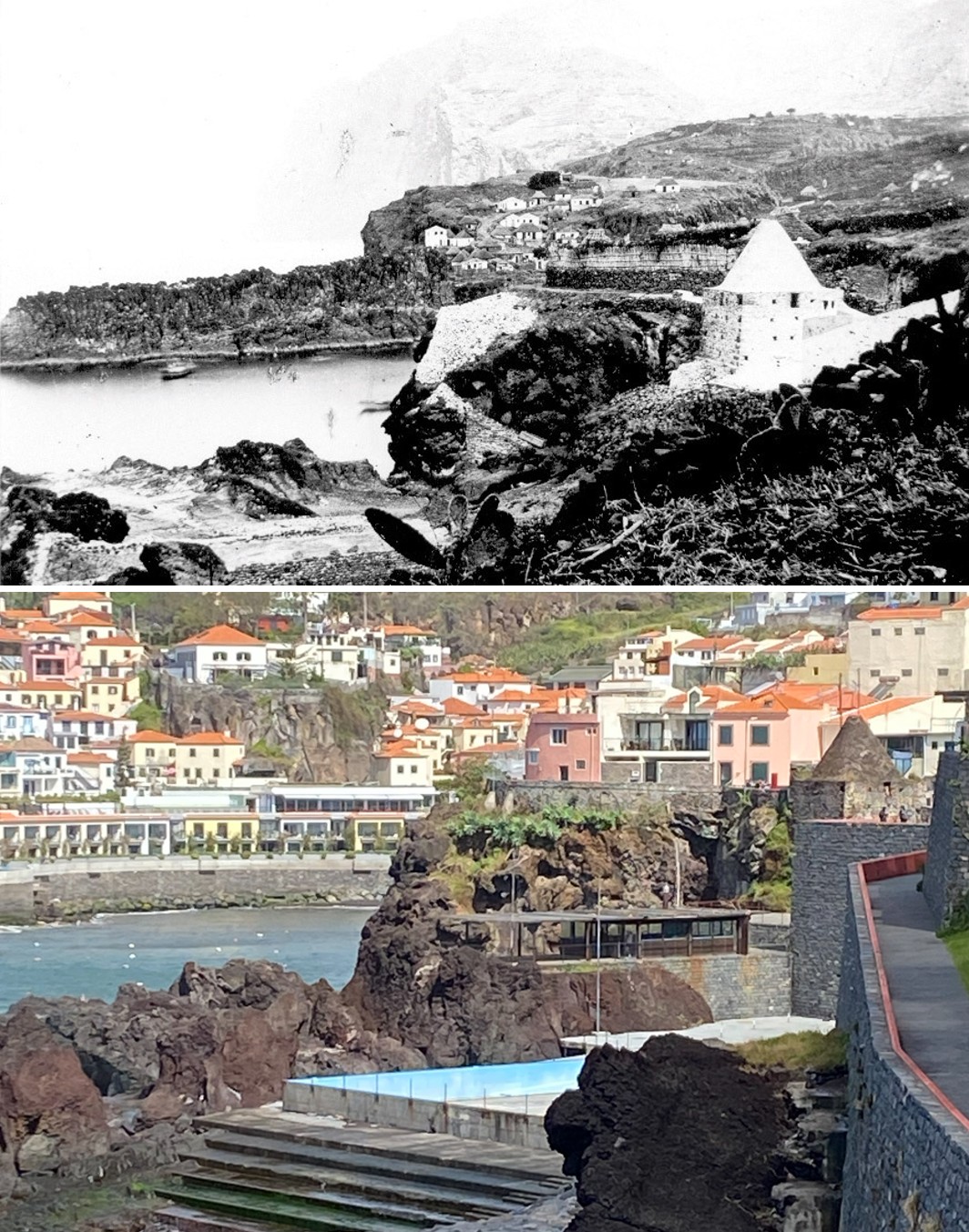
Figure 35 (top) – Photo of the salt pans and the bottom of the lime kiln are located in Trincheira, above the old salt pans, in the parish of Câmara de Lobos, and were built around 1874 by Roque Teixeira de Agrela. (Source: Madeira Library Collection. Available at: https://arquivo-abm.madeira.gov.pt/descriptions/73569 [Consult. June 2026]). Figure 36 (bottom) – Pool Bar. Sunbathers. Photo by Pedro Kok. (Source: Available at: https://www.pedrokok.com/salinas-complex-at-camara-de-lobos-madeira-portugal/ [Consult. June 2026]).
2.8 Materiality and Perpetuity
The choice of materials in the design of the Salinas Swimming Pools is inscribed in an ethical vision of architecture as a durable practice, sensitive to natural cycles and the logic of the place. Paulo David has insisted, throughout his work, on the importance of the “weight” of architecture, not in the literal sense of the material, but in its symbolic, tectonic and cultural density as a territory inhabited by layers of time, memory and culture.
“The choice of materials, in particular the use of local basalt, with its roughness and geological weight, constitutes not only an aesthetic decision but also an ethical inscription” (Norberg-Schulz, 1979).
Concrete, cast in its original place, presents tonal variations that result from the composition of the aggregates and the action of seawater. The basalt stone, collected locally, is used in the pavements and in the transition zones, evoking the original floor of the salt pans. Steel, in turn, oxidises with the sea air, taking on a rusty tone that brings it closer to the earth and lava. About the materiality in Paulo David’s work, Gonçalo Byrne states that:
“The constituent parts of the different volumes are hierarchically arranged, which contributes to a remarkable unitary identity, often accentuated by the use of the same material in all surfaces, whether vertical or horizontal, as observed in some single-family houses and, more intensely, in larger projects” (BYRNE, 2008: 7, our transl.)
The separation of materials for each architectural element is evident, letting the material proclaim its tones and textures, often emphasises pure forms and orthogonal lines.
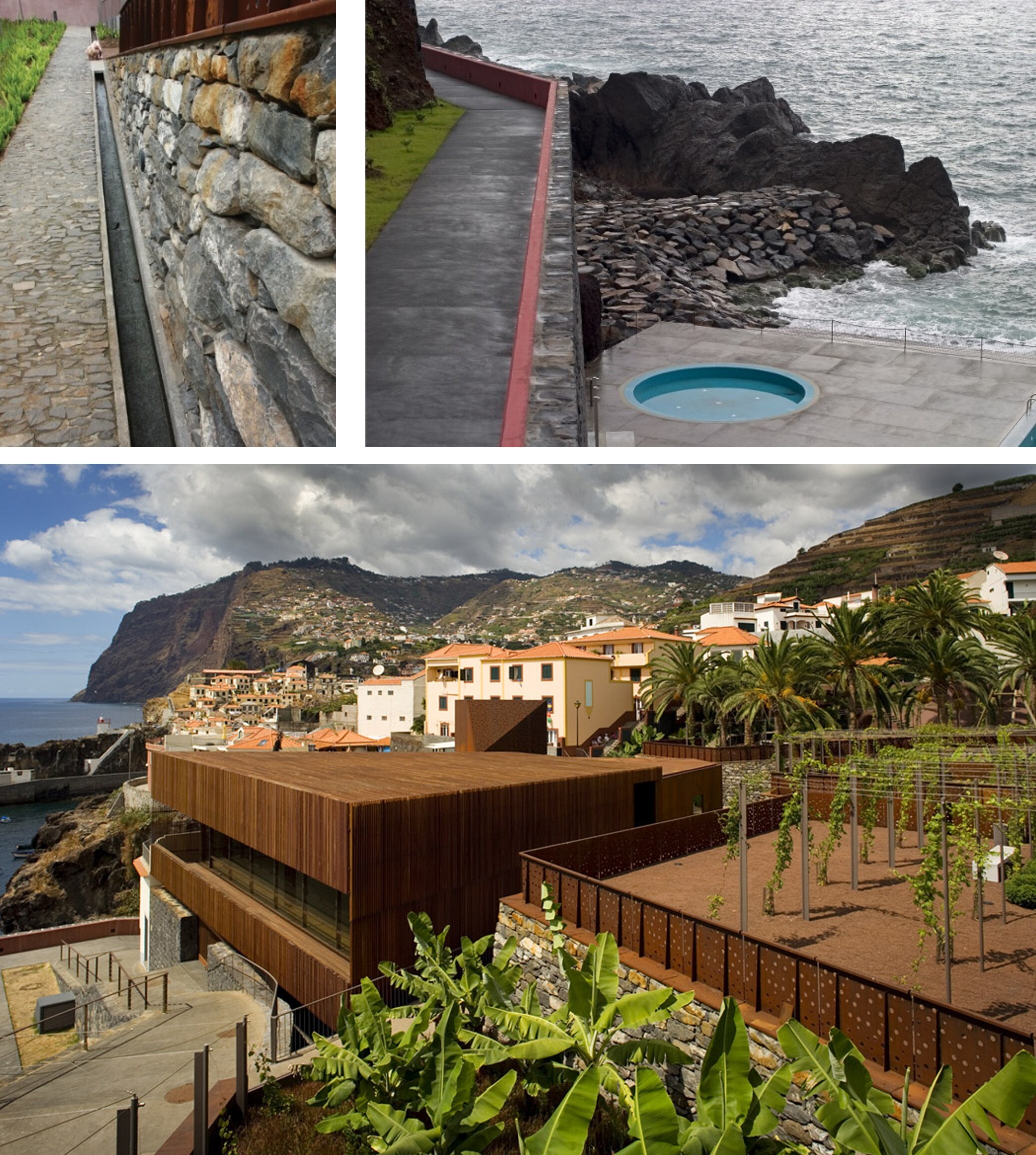
Figures 37, 38 and 39 – Materials and textures. Photo on the left by Martin Sauter, on the right and below by Fernando Guerra FG+SG. Composition by the author (Source: Global Landscaping Collection. Available at: https://gap.pt/?project=salinas-swimming-pool [Consult. June 2026]).
The structure of the pools takes advantage of the existing layout, minimising the need for deep excavations. Waterproofing is done with minimally invasive techniques, and the water circulation systems are passive whenever possible, allowing natural renewal with the tide. There is no visible machinery, no exposed technical systems: everything is buried or hidden. This ecological dimension of the project, although discreet, is central to its design. It is not an explicit ecological discourse; there are no didactic signage or interpretive panels. The gesture is silent, almost invisible, but effective. As Barbara Bogoni points out:
“Thus, Paulo David’s buildings resemble ‘millennial objects’, sedimentations and rocky concretions, a necessary consequence of the evolution of natural events, and perhaps they are ‘timeless objects that simultaneously contain history, present and future in the roughness of their basaltic surfaces. There is also an evident concern with the durability of the set. Wear and tear is not a problem, but a part of the process. Just as agricultural terraces age with dignity, swimming pools are also designed to resist, corrode, mark themselves, but without losing their function or beauty.” (BOGONI, 2023: 66)
The result is a space that does not age by obsolescence, but by sedimentation. An architecture that is wanted to be closer to the rocks than to the icons, in the words of Gonçalo Byrne:
“Paulo David’s architecture aspires to a certain timelessness, receptive and open, rooted in pre-existence, simultaneously projecting a radical openness, waiting for a regenerative life. It is a vital alternation between a projected archaeology and the desire to predispose oneself to an architecture eager for life and plenitude.” (BYRNE, 2008: 6, our transl.)
3. Profile of the authors
3.1 Paulo David:
Trained in Lisbon and with experience with architects such as Gonçalo Byrne and Carrilho da Graça, Paulo David returned to Funchal and founded his own office in 2003. His work became known for redefining the relationship between architecture and Madeira’s landscape. His legacy is consolidated by the idea of “learning from the past”, a concept that he himself explored in texts. This philosophy underlines the importance of returning to the origins and the local context, treating architecture as a continuous process of learning and adapting to the place.
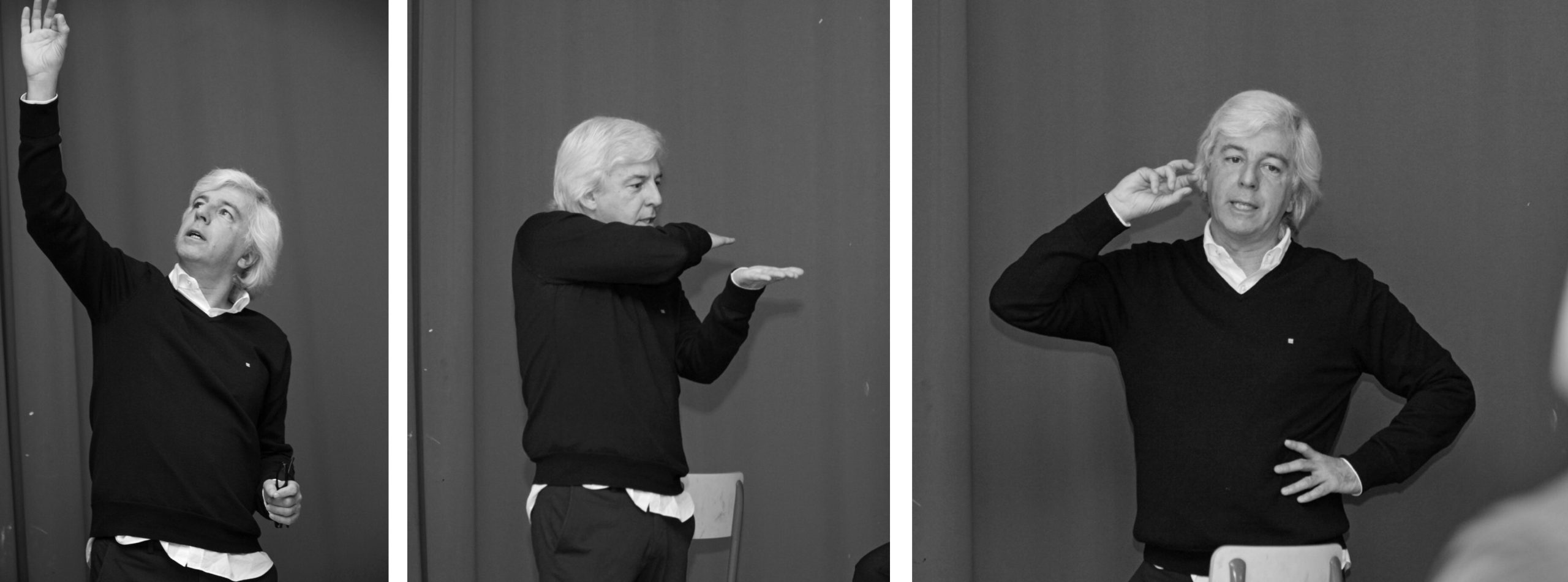
Figure 40 – Sequence of photos of architect Paulo David in 2014, during the event “City and its permanence” at the University of Nebrija, Madrid (Source: Available at: https://www.nebrija.com/medios/actualidadnebrija/2014/03/24/la-ciudad-y-su-permanencia-por-el-arquitecto-paulo-david/ [Consult. June 2026]).
Paulo David’s architectural production, recognised with awards such as FAD and with the selection for the Mies van der Rohe, is based on a deep reflection on the island context. His conceptual approach, articulated in lectures, explores the dialectic between nature, which allows human occupation, and its force, which imposes a condition of impermanence. This tension materialises in the Salinas Complex, where architecture resists and, at the same time, yields to the ocean’s domination. This methodology was later applied to the urban scale in the Bay of Câmara de Lobos, where, according to Emílio Tuñon, the architect used the void as a design element to redefine and order the dense urban fabric.
David’s architecture is characterised by an intrinsic relationship with the land: he draws with the topography, excavates and designs to the rhythm of the slopes, dialogues with the sea and the winds. As Gonçalo Byrne observes:
“Paulo David appropriates the site as the raw material of the project, geometrizes the irregular profile of the cliff and defines a new field of formal reference that opens up to resignify the primitive character of the environment.” (BYRNE, 2008: 8, our transl.)
Below is the diagram presented in the exhibition “On the continuity of forms and the way they land” by Galeria Porta 33 in 2019, about the works of architect Paulo David. In the exhibition curated by Nuno Faria, the architect’s works are represented in summary diagrams.
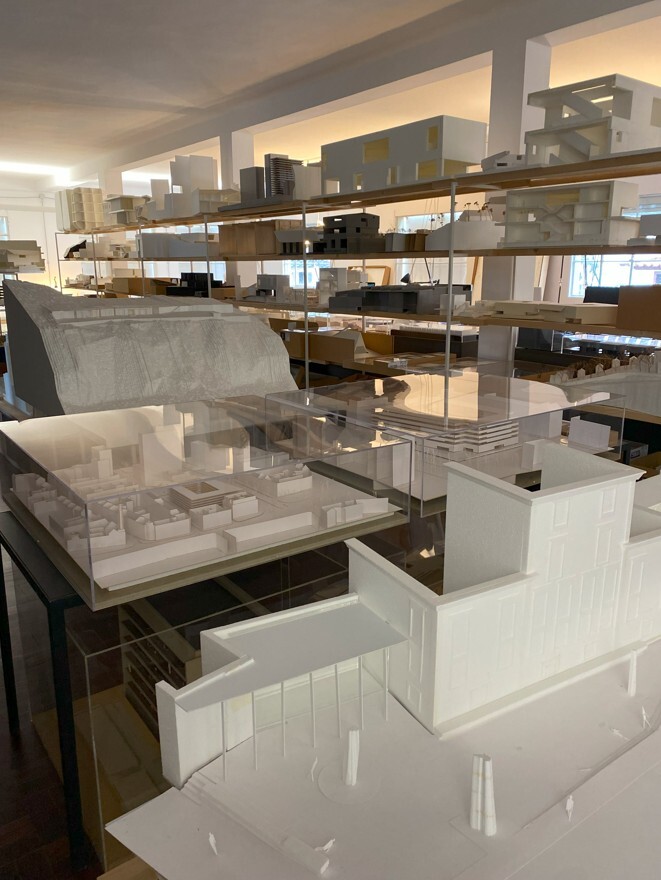
Figure 41 – Paulo David and his studio. Highlight for the “Infinita” Bookcase. The author herself visited the architect’s studio in May 2025. Madeira Funchal (Source: the author).
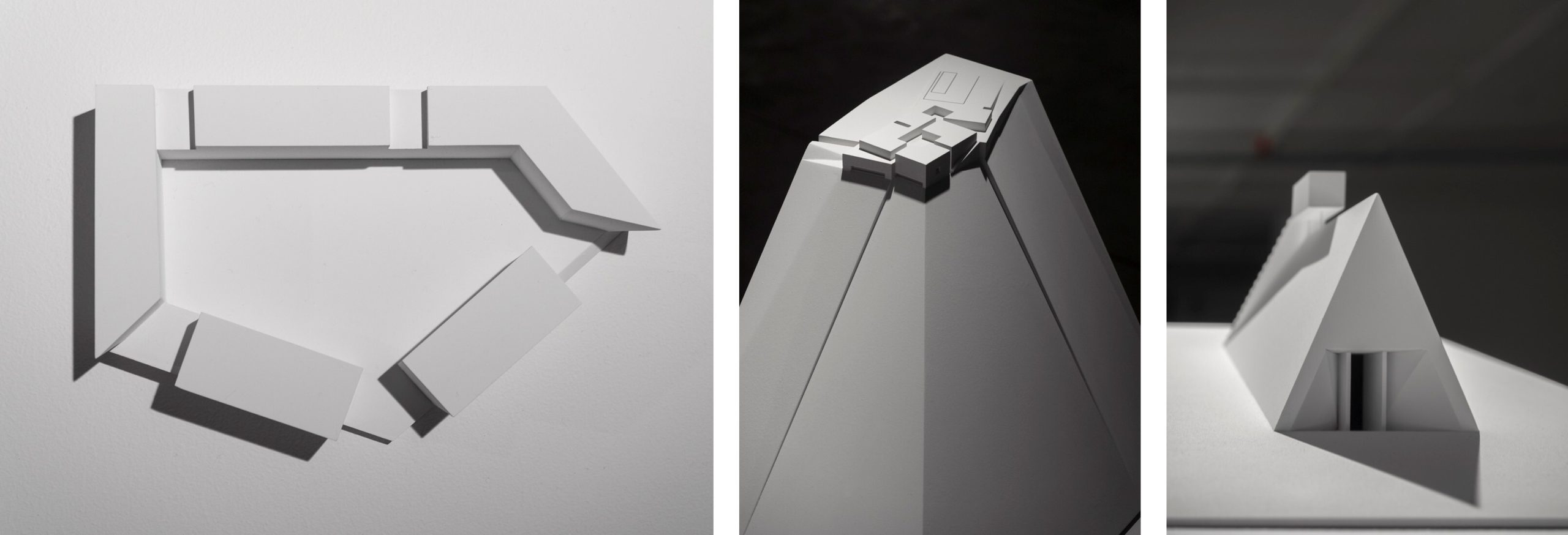
Figure 42 – Photos by Fernando Guerra FG+SG, for the exhibition Garagem Sul, CCB “Paisagem como Arquitetura”, 2015 (Source: Archdaily. Available at: https://www.archdaily.com.br/br/791556/paisagem-como-arquitetura-joao-gomes-da-silva-e-paulo-david/578c3561e58ecef79800002d-paisagem-como-arquitetura-paulo-david-plus-global [Consult. June 2026]).
“The redesign of the void, the subtle reconversion of what exists. A surgical incision plan, a process of taking care of the value of time and the fragility of the traces. An apnea requirement. A solid, serene Resistance.” (BASTOS, 2019, our trans.) [1].
In architecture, “resistance” means transforming a space critically and carefully while respecting what already exists. The work of architect Paulo David on Madeira Island exemplifies this, as he investigates the territory and memory to create something more conscious. The international profile of his work is attested to by his participation in events such as the Venice Biennale. In 2016, he presented the installation “Inverted Ruins,” which explored how architecture can integrate into the historical and geological layers of a place. This presence on global stages reinforces the relevance of his approach in the contemporary architectural debate.
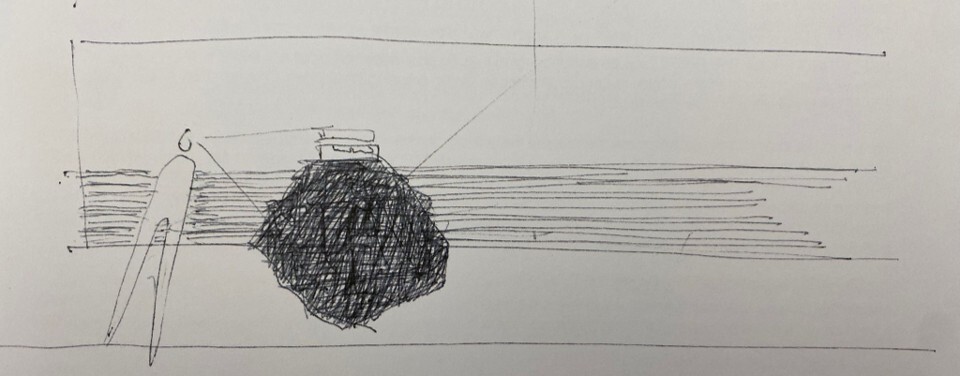
Figure 43 – Sketch for the exhibition of the Venice Biennale in 2006 (Source: Collection of Paulo David Studio. Registered in the catalogue about his participation in the Biennale. Communication with the author on a visit to the architect’s studio in May 2025).
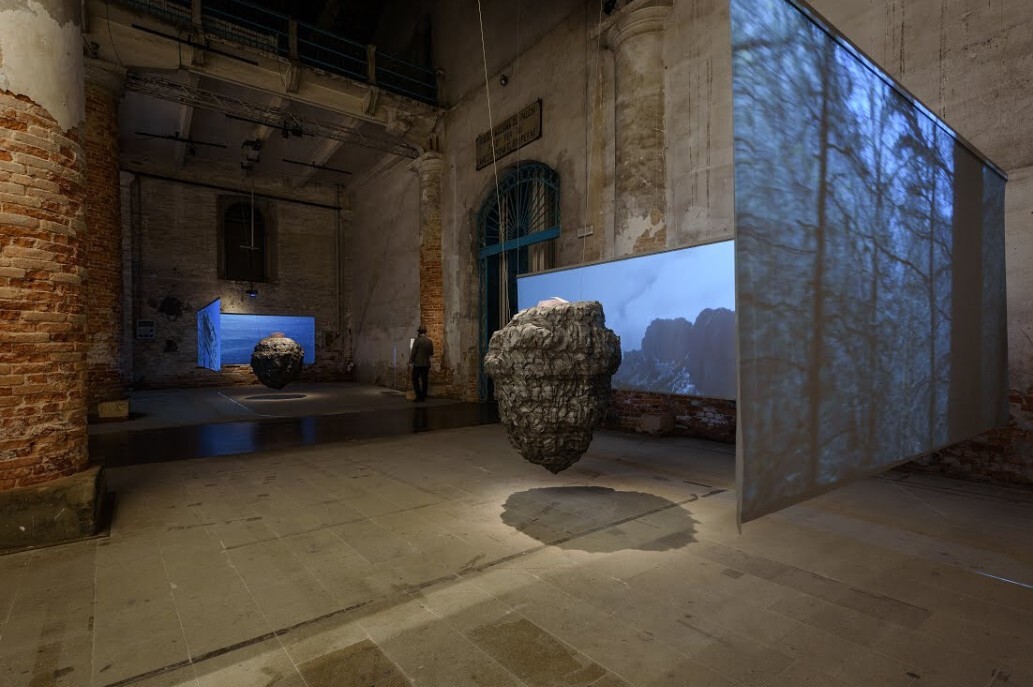
Figure 44 – “Inverted ruins” by Paulo David. Photo by Andrea Avezzù. Courtesy Venice Biennale, with the support of Madeira Island, Francisco Xavier de Castro, Jakob, Diplofer, Controsol, Armazém do Mercado (Source: Available at: https://artsandculture.google.com/asset/inverted-ruins-paulo-david/wwFoEnQzMfVqpw?hl=en [Consult. June 2026]).
Paulo David’s influence extends beyond his projects to academia and consulting. His work as a consultant for the Funchal City Council and as a visiting professor at several universities demonstrates his commitment to knowledge sharing. Currently, as a guest professor at Instituto Superior Técnico in Lisbon, he shares his extensive practical experience with students, disseminating his architectural philosophy focused on contextual integration.
3.2 Global Landscaping: Inês Norton and João Gomes da Silva
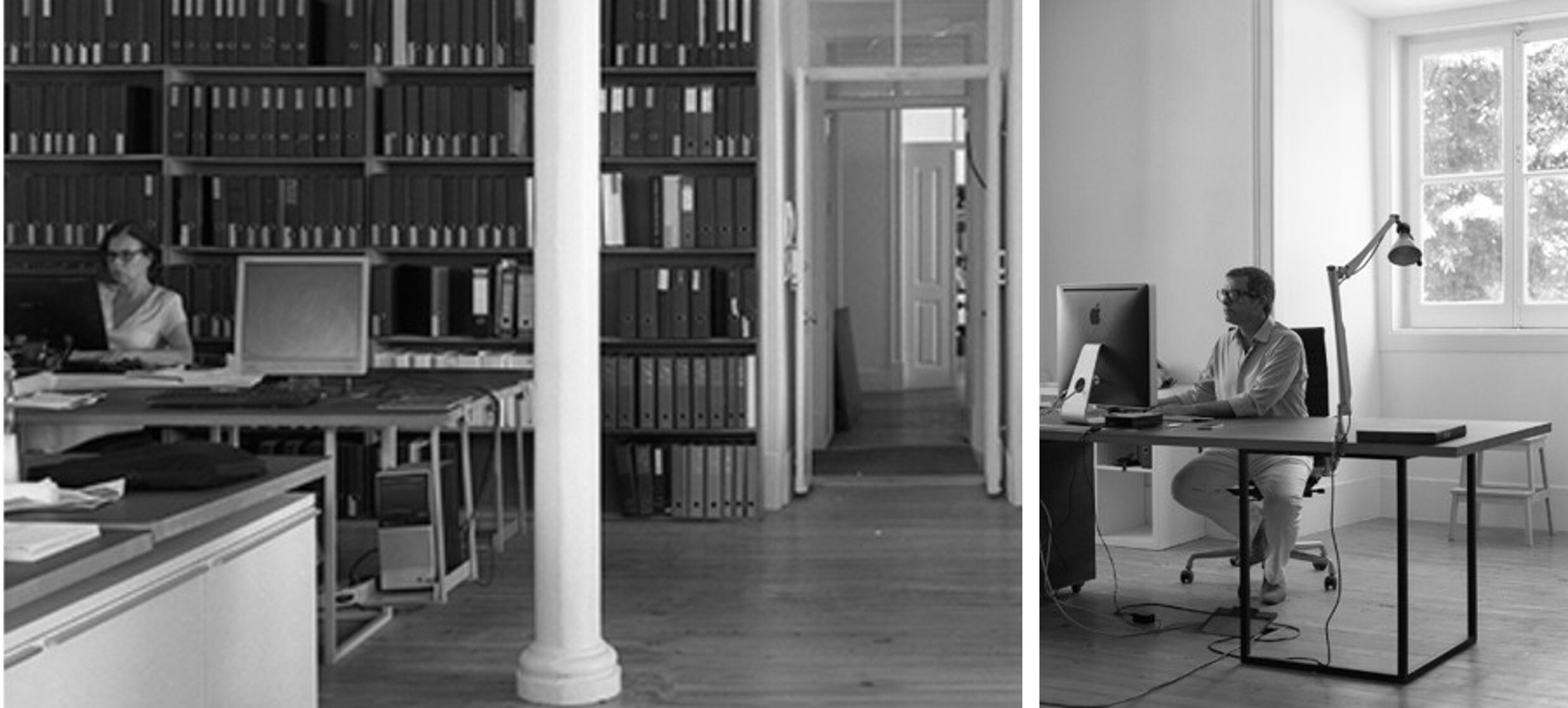
Figure 45 – Inês Norton, and João Gomes da Silva, at Atelier Global (Source: Global Atelier).
The practice of landscape architect João Gomes da Silva, developed over three decades, is recognised for its rigorous and conceptually demanding approach. His methodology, applied in reference projects such as the Tejo-Trancão Park and in collaborations with architects such as Paulo David and Álvaro Siza, views the landscape as a processual structure rather than a static scenario. This disciplinary thought, systematised in publications such as “The Order of Landscape”, is disseminated through his teaching activity in institutions such as IST and EPFL, and his work has been widely awarded and exhibited internationally.
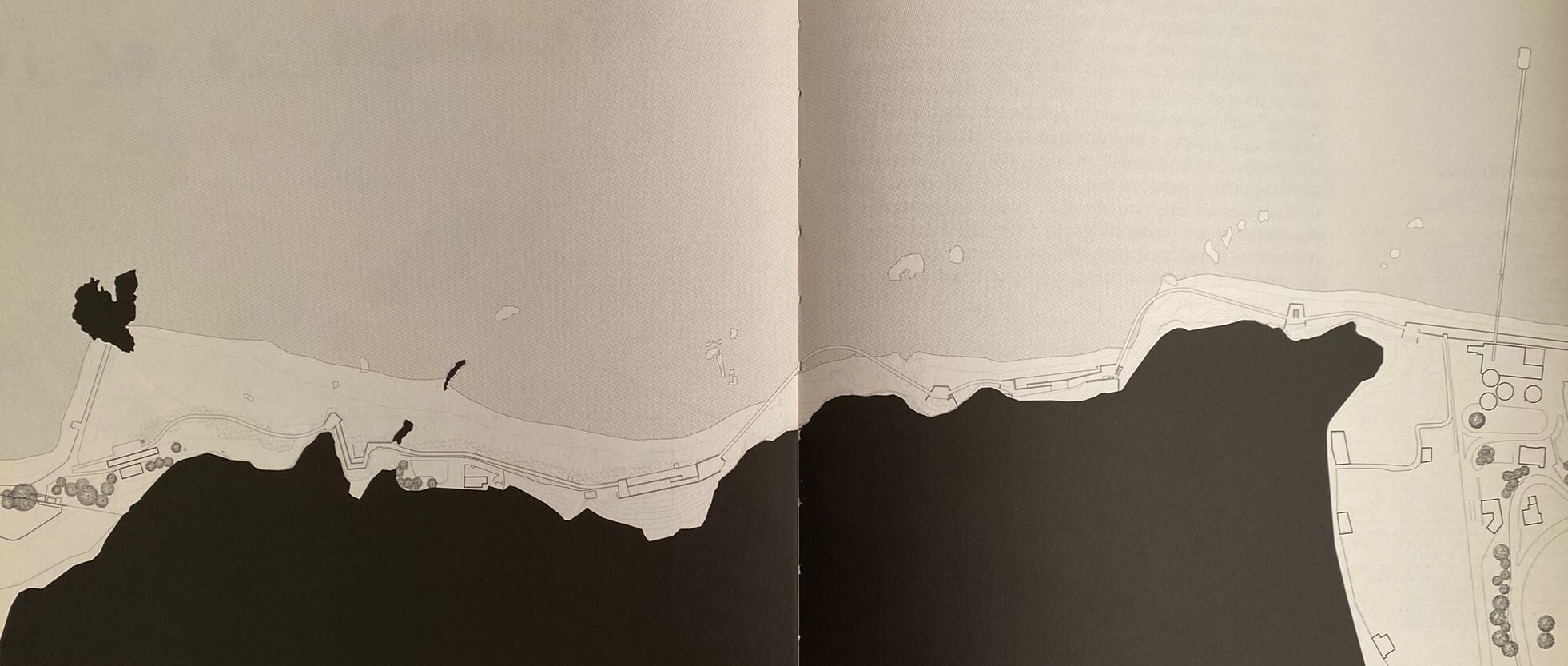
Figure 46 – Plan of the Praia Formosa Promenade (Source: SILVA, 2019: 299).
Inês Norton, landscape architect and partner at Global, shares this same philosophy, in which the place holds the information for the projects. With a degree from the University of Évora, she combines ecological sensitivity with the rigour of contemporary design in his transdisciplinary practice. In co-direction with João Gomes da Silva, she develops projects that are based on a critical reading of the place and the design of resilient landscapes. Her work focuses particularly on the intersection between art, ecology and landscape, contributing to the disciplinary renewal of landscape design in Portugal through projects, teaching and publications.
She also worked with Paulo David on the São Vicente Caves complex. This complex is on the other side of Madeira Island. Even though it’s a very different project, it shares the same idea of using natural materials to blend the buildings with the landscape and plants.
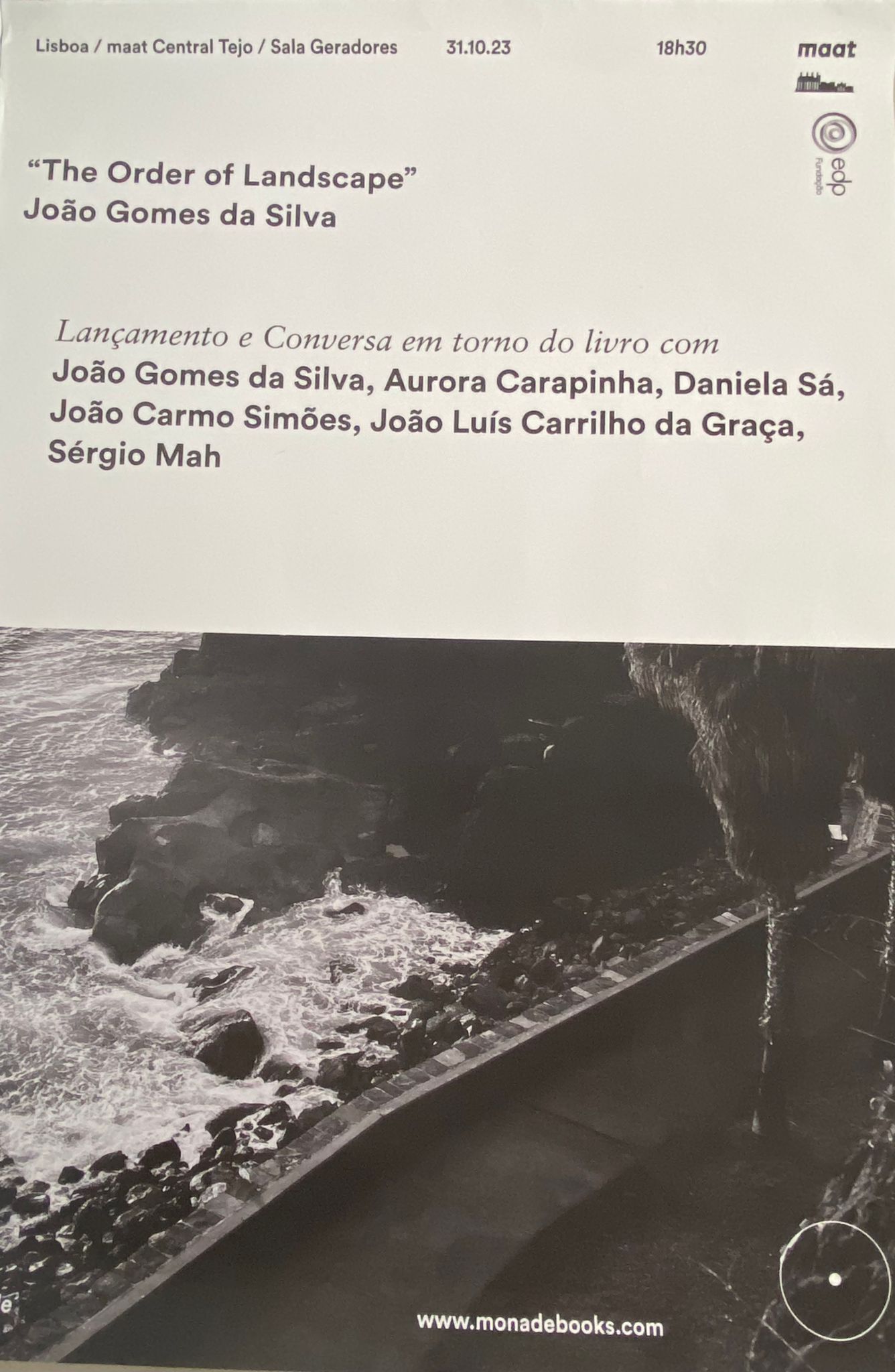
Figure 47 – Poster of the release of the book “The Order from Landscape”, Photo of the Promenade (Source: Global Landscaping Collection. Photograph of the author visiting the studio).
4. Critical interpretations
4.1. The place as a cultural construction
Architecture criticism in Portugal has, in recent decades, expanded its analytical tools, increasingly incorporating the landscape, cultural, and geographical dimensions of projects. The case of the Salinas Swimming Pools, due to its specificity and subtlety, has attracted the interest of several authors who seek to read the project not only as built architecture but also as a cultural gesture.
For Gonçalo Byrne, Paulo David’s work is part of a lineage of architecture that has a residual connection with the modern but reveals a sensitive trace of Portuguese roots. Byrne states that Paulo David evidences “some traces of the Mediterranean and Portuguese practices, formally syncretic, particularly sensitive to locations and evidencing a landscaping potential” (BYRNE, 2008: 6, our transl.).
This parallelism with the levadas [2] is particularly fortunate in the context of the Salinas Pools, where the water and land paths intertwine on the slope. As in the levadas, the route does not impose but adapts.
Emílio Tuñón, in a text published in 2G magazine: “The complex represents a beautiful topographic recovery of the seafront, giving continuity to an existing circuit of paths, establishing social links between work and leisure spaces (TUÑON, 2008: 10, our transl).
These routes are understood not only as a leisure activity, but as an expression of the cultural relationship with the ocean, a fundamental interpretation in the island context. The symbolic value of water, as an element that structures the landscape, evokes the search for an almost ritualistic encounter with the sea, something present in the imagination of everyone on the island. The Atlantic character of the place imposes another scale, another regime of time and erosion. The architecture is not scenographic, but seismic.
João Gomes da Silva, in texts and conferences, has insisted on the idea that the landscape is, above all, a cultural construction. By intervening on the escarpment of Câmara de Lobos, the landscaper did not seek to “improve” nature, but to understand the history of the place: the walls, the terraces, the salt paths, the gestures of the fishermen. For Jocobo Garcia German in “The Landscapes of Robert Smithson”, the place ceases to be physical and becomes a timeline and memory. “Aiunar o real com lo imaginário” (blending reality and imagination) (GERMAN, 2002: 9). This position is echoed in several recent critical readings that reject the simplistic opposition between “natural” and “artificial”. In the case of the Salinas Swimming Pools, this opposition dissolves: the architecture emerges as a continuation of the landscape and the landscape, in turn, as an ancient cultural construction.
“Importantly, the cohabitation of the artefact with the dominant expressive force of the landscape lasts to this day. A landscape that struggles to resist even the recent and intense tourist colonisation.” (BYRNE 2008: 5, our transl.)
4.2 Between ruin and permanence
Another critical dimension that recurs in the project’s readings is its relationship with ruin. The state of abandonment of the old salt pans is incorporated into the new design. The logic is not that of historical reconstruction, but that of material continuity. This work on the ruin also calls for a reflection on time: the long time of the landscape, the brief time of architecture, the cyclical time of tides and seasons.
“Within the modern tradition and its epigones, Portuguese architecture has often been presented as the most solid guarantor of a resilient attitude, combining optimism about the ability to transform the world, based on very precise interventions in specific contexts, with a certain melancholy derived from the dilation in time of a transformation that can hardly leave the hand of architecture.” (TUÑON, 2008: 8)
The place takes on importance over time. Geological time, but also human time. The swimming pools are not a finished work, but an ongoing process. This procedural dimension of the project is part of its critical force. Unlike many tourist facilities that bet on planned obsolescence and an image of immediate impact, what is proposed here is an architecture that gains over time, that allows itself to be marked and corroded, that ages without losing dignity: “an architecture, in short, where time, not space, determines how we perceive human actions and their relations with nature” (TUÑOM 2008: 13, our transl.).
Bárbara Bogoni. proposing an ethical and temporal reading of Paulo David’s work:
“Architecture and Landscape. At the end of the design process, when time sets in, and vegetation takes root, the metamorphosis is complete, architecture becomes an intimate part of the landscape” (BOGONI 2023: 66).
“And they are manifestations of their need to belong to the place and to be a proponent of its evolution, far from the practice of formal and technological invention or any desire for self-affirmation and linguistic self-celebration, produced by the mediation between an abstract and minimalist poetics and the variety and complexity of the natural and anthropic elements that constitute their universe of reference” (BOGONI 2023: 66).
This somewhat provocative statement points to a broader critique of the logic of commodification of the island landscape, often instrumentalised as a tourist resource. The project of the Salinas Swimming Pools, with its formal and material economy, proposes a resistance to this logic, a way of living that opposes consumption and approaches permanence.
4.3 Entropic Landscape – The Place as Tension
The Salinas Swimming Pools project in Câmara de Lobos can be interpreted, in light of Robert Smithson’s aesthetic theory, as a form of architecture that accepts and even summons entropy as part of its formal grammar. In this basaltic territory, where the spaces of the old salt pans are conflated with the limits of the new swimming pools, a logic is established: architecture does not seek to fix time but to allow it to pass.
Robert Smithson described entropy as “the systematic decline of differentiation and order into chaos.” However, the American artist did not regret this decline; rather, he saw it as a condition of the modern landscape, a landscape of residues, fragments, reconfigurations. In the famous series Monuments of Passaic, Smithson observes crumbling suburban infrastructures, bridges that no longer lead, and stairs that do not rise, and discovers in them the true poetics of the place.
Something similar can be said of the Salinas Pools: their value is not in their formal purity, but in their condition of reorganised ruin. The project does not aim to “correct” the previous landscape, nor to erase it in favour of a new order. On the contrary, the ruins of the salt pans, the worn steps, and the melancholy itself are integrated as design material. The new design inhabits the fragment, as if the architecture started from the zero point of entropy and, from there, negotiated a new form. Entropy, far from being a problem, is a thought hypothesis.
“Only to humanity, in contrast to nature, has the right to connect and separate been granted, and in the distinctive manner that one of these activities is always the presupposition of the other. By choosing two items from the undisturbed store of natural things in order to designate them as ‘separate’, we have already related them to one another in our consciousness, we have emphasized these two together against whatever lies between them. And conversely, w can only sense those things to be related which we have previously somehow isolated from one another; things must first be separated from one another in order to be together.” (SIMMEL, 1994: 5, 1st pub. 1909)
The Salinas Swimming Pools can be read metaphorically as a set of “bridges” between man and the sea, between rock and water, and between the agricultural past and the playful present.
“To admit the paradoxical question of the meaning of coexistence in the reading of the integration of artifice over the natural, an exercise not uncommon in the discipline of architecture. This leads us to understand the landscape not as exhausted by what is there or by its permanence, but as a changeable understanding of its transformation into continuity. Conceiving the project beyond its place, which, however, conceives, designed beyond its limits” (DAVID, 2021: 29, our transl.)
The door, in the same essay, symbolises for Simmel the act of separation: it marks the passage between the inside and the outside. This liminal experience also takes place in the Swimming Pools: as you descend the stone paths, the body progressively passes from the urban to the coast, from dry to humid, from architecture to landscape. João Gomes da Silva, in his text “Paulo David a Arquitectura del mundo en cada Lugar”, compares Paulo’s works with the geological formations of the volcanic island, where the materiality and reading of the place induce a mimetic architecture.
“Volcanic ash generates numerous geological series that lead to the formation of crystals (slow) or amorphous basalt (fast), and Paulo David’s architecture is also materialised in delicate polyhedra whose crystalline or amorphous coatings are carefully inscribed in the space of the landscape and the city”. (SILVA, 2008: 71)
In Barbara Bogoni’s book, Paulo David discusses the chapter “Thought, Path, Project. Architecture as Landscape” regarding his intentions when considering the act of designing: [31].
“I seek a new humanity in the project, which lies in humanity’s need to experience the continuity of the flow of time and integration with place. The search for continuity, therefore, moves from listening to the place to dissolving in the place, so that architecture becomes place” (DAVID apud BOGONI, 2021: 55)
Simmel, on the other hand, reminds us that all construction is ultimately a symbolic act: the bridge and the door are human gestures that give meaning to space. The Salinas de Câmara de Lobos, with their discreet architecture, fulfil this symbolic function with accuracy and poetry. By creating a “bridge” between past and present, between ruin and form, between natural and cultural, they become a place in the fullest sense of the term. Being an extension of its rhythms and forms. Geometry is measured by topography, materiality responds to volcanic rock, and the design of the paths is a reading of the ancient salt accesses. As João Gomes da Silva wrote:
“For a landscape architect, the goal is not merely to analyse cultural or ecological facts separately; it is to create spaces. Following Elizabeth Meyer’s idea, we must abandon the old divisions (such as culture/nature) and understand the landscape as a real, dynamic space rather than merely an image. In design, we use topology to understand the place in depth and as a tool to create spaces, combining technical knowledge and artistic sensitivity” (SILVA, 2023 :256).
The project is silent, almost invisible, and that is precisely where its radicality lies. As Byrne said: “Paulo David appropriates the site as the raw material of the project, geometrizes the irregular profile of the cliff and delimits a new field of formal reference that opens up to resinify the primitive character of the environment.” (BYRNE, 2008: 6)
In this line, the project of Paulo David and João Gomes da Silva can be read as an ethical statement. It is about doing less, intervening with restraint, and accepting that the place is stronger than any architectural gesture.
5. Conclusion
In 2016, Pedro Belo Ravara published an article in the newspaper publico.pt about the salt pan project, and quoted the writer Valter Hugo Mãe, saying “we immediately suspect the inert nature of the materials. They may be quiet when looking, but there is an intelligence there that seems to come from such a deep culture, that only nature can teach how to build like this” (MÃE apud RAVARA 2016, our transl.)
The article notes that the project received the best stone-built intervention prize in Italy and the best public space prize in Barcelona. The Alvar Aalto Foundation in Jyväskylä, Finland, which awards prizes every six years, also presented him with an award. The minutes of the jury meeting state the following about Paulo David’s work: “David’s work is locally rooted, but at the same time universal. It is a timely reminder that architecture can be calm, serene, lyrical, powerful, and “non-spectacle.” (JURI apud RAVARA 2016 our transl.).
Pedro Ravara, highlighting these international recognitions, appeals to greater attendance at the complex, citing the restaurant’s closure. During our visit in May 2025, the pavilion was abandoned, although the pools still seemed to be used by the community during the season. An intervention has been deemed necessary since 2016 to ensure the site is used to the best effect. Pedro Ravara agrees that, in this new concession, the Metropolitan Society should include a hotel or other accommodation, with a parking lot and space for restaurants. He criticises, however, that the architect who authored the project was not considered for the renovation. Ravera points out that the original author safeguards essential elements and that authorship can indeed maintain continuity amid necessary changes.
In 2016, the design administration, without prior consultation with the project’s author, Paulo David, decided to hold a competition that excluded the initial proposals, including Byrne’s: “We observe that the public still does not consider the issue of authorship. It is not conceivable that something can be built over what was built; authorship is still not viewed as a possible catalyst for the development of the city.” (RAVARA, 2016, our transl.)
However, despite the fanfare and extensive promotion of this new intervention in the Câmara de Lobos Bay, nothing has changed by 2026. This points to another important issue: the lack of continuity in proposals developed without care, which are also stagnant. In 2025, the restaurant, almost 9 years after the discussion of the new intervention, remains unused and unmaintained, in dire need of renovation. This shows a lack of commitment to the optimisation of public resources
In 2025 the theme is still used as a promotion for CDS candidacies for the municipal bodies of Câmara de Lobos in Jornal da Madeira. The then candidate defended the requalification and enhancement of the bay, with the entire beach coming under the tutelage of the municipality, which, together with the Regional Government, should requalify the area, creating parking lots and support points for all sea activities. The candidates reinforced “the urgency of recovering the accesses from Largo to Praia do Vigário, a degraded and unsafe area” and also defended the creation of a Fisherman’s Museum, a “Fishing Route” and the creation of an elevator access to the islet, “An area that can and should be enhanced for tourism”.
Whether these proposals will be adequately promoted, taking into account authorship and the material and natural heritage there, remains to be seen. Throughout this essay, we have sought to place the project within a broader field of architectural and landscape thought. From the collaboration between Paulo David and João Gomes da Silva to resonances with Robert Smithson, Georg Simmel or Gonçalo Byrne, it was possible to observe how this work feeds on a dense constellation of references, without ever losing contact with reality: the ground, the sea, the wind.
The lesson this project offers us is clear: high-quality public architecture with low formal impact and deep cultural impact is possible. The Salinas project demonstrates that you can build places where body, water, stone and time can coexist in silence, in tension, in freedom, and the new proposals for intervention in this special place must be careful and sensitive to all these issues.
Bibliography
BOGONI, Bárbara – Paulo David. The Lesson of Continuity. Milan: AMAG Magazine, 2023.
BYRNE, Gonçalo – A Arquitetura de Paulo David. Um Arquipélago de Pensamentos. 2G, n.º 47. Barcelona: Gustavo Gili, 2008, p. 4-7.
CDS quer recuperação da baía e requalificação do varadouro de Câmara de Lobos. Jornal da Madeira. 02/10/2025. Available at: https://www.jm-madeira.pt/regiao/cds-quer-recuperacao-da-baia-e-requalificacao-do-varadouro-de-camara-de-lobos-OJ18883692 [Consult. June 2026].
Complexo Balnear da Câmara de Lobos / Paulo David. ArchDaily, 23 jun. 2011. Available at: https://www.archdaily.com.br/br/01-2779/complexo-balnear-da-camara-de-lobos-paulo-david. [Consult. 2 July 2025].
FRANGO, Carlota Margarida – Espaços de Encontro com a Memória. Requalificação da frente-mar da Vila de Câmara de Lobos. Lisboa: Universidade de Lisboa. 2016. Dissertação de mestrado.
GERMAN, Jocobo – Los diez Paisajes de Robert Smithson. O Circo n.º 98. Boletim técnico ano 2002.
NORBERG-SCHULZ, Christian – Genius Loci: Towards a phenomenology of architecture. New York: Rizzoli, 1980.
Paulo David. 2010. AFASIA Archzine. Available at: https://afasiaarchzine.com/2010/07/paulo-david-arquitecto-2 [Consult. 2 July 2025].
Paulo David. 2G, MAGAZINE n.º 47. Barcelona: Gustavo Gili, 2008.
Paulo David Casa das Mudas, centro culturale di Calheta Madeira, Portogallo. Casabella 758, p. 68.
Paulo David Padiglione e ingresso al vulcano São Vincente, Isola di Madeira, Portogallo. Casabella 774, p. 80.
Piscinas públicas e passeio marítimo; Restaurante, Câmara de Lobos Portugal. JA227 Jornal Arquitectos. Abr-Maio/Jun. 2007, p. 104-109.
RAVARA Pedro Belo – Património contemporâneo em perigo nas Salinas de Câmara de Lobos. PÚBLICO Opinião. 06/04/2016. Available at: Património contemporâneo em perigo nas Salinas de Câmara de Lobos | Opinião | PÚBLICO [Consult. June 2026]
SERAPIÃO, Fernando – Topografia sensível: complexo de piscinas em Câmara de Lobos, Ilha da Madeira. Projeto Design nº. 314. São Paulo, abr. 2006, p. 80-87.
SILVA, João Gomes da – Paulo David: A Arquitetura do Mundo em Todo Lugar. 2G n.º 47. Barcelona: Gustavo Gili, 2008, p. 68-71.
SILVA, João Gomes da – The Order From Landscape. Lisboa: Monadebooks, 2019.
SIMMEL, Georg – The Bridge and the Door (first published in 1909). Theory, Culture and Society, vol. 11, n.º 1, February 1994, p. 5-10 (trad. Mark Ritter).
SMITHSON, Robert – Entropy and the New Monuments. Artforum, June 1966.
TRINDADE, Maria – O Labirinto do Tempo. Viagem à obra de Paulo David. Porto: Faculdade de Arquitetura da Universidade do Porto, 2021. Dissertação de mestrado.
TUÑON, Èmilio – Geografia como Corpo e Arquitetura como Geografia. 2G n.º 47. Barcelona: Gustavo Gili, 2008, p. 8-13.
Other resources
Interview with Paulo David (May 2025)
ARCHEEVO. Biblioteca Regional da Madeira. Digital documents. Available at: https://arquivo-abm.madeira.gov.pt/descriptions/1005586 [Consult. 28 June 2025].
LANDEZINE, Landscape. Architecture Platform, “Salinas Swimming Pools” 2006. Available at: https://landezine.com/salinas-swimming-pools-by-global-arquitectura-paisagista/ [Consult. 25 June 2025].
GLOBAL. Arquitetos Paisagistas. Available at: https://gap.pt/?project=salinas-swimming-pool [Consult. 8 July 2025].
Paulo David “Da Continuidade das Formas e o Modo como Pousam” [uma exposição em vários tempos]. Exhibition curated by Nuno Faria. Porta 33. Funchal, 2019. Available at: https://www.porta33.com/porta33_madeira/exposicoes/content_exposicoes/paulo_david/paulo_david_arquivo_conversa.html [Consult. June 2026].
PUBLIC SPACE. Artigo Complexo das Salinas, Available at: https://www.publicspace.org/es/obras/-/project/e142-complexo-das-salinas [Consult. 3 July 2025].
PEDRO KOK. Fotografias das Salinas available at: https://www.pedrokok.com/salinas-complex-at-camara-de-lobos-madeira-portugal/ DR [Consult. 10 July 2025].
Notes
[1] Sofia Pinto Basto on Paulo David’s work – Ensaio para exposição de Paulo David, Porta 33 Available at: https://www.porta33.com/porta33_madeira/exposicoes/content_exposicoes/paulo_david/paulo_david_arquivo_conversa.html [Consult. June 2026].
[2] Traditional hydraulic systems that permeate the island.